
Area Rug Cleaning • Homeowner Guide
Area Rug Cleaning: How Professionals Handle Wool, Silk & Synthetic Rugs
If your rug is valuable, delicate, or simply important to your home, the biggest risk is not just that it stays dirty. The bigger risk is cleaning it the wrong way: over-wetting the foundation, stripping natural fibers, leaving residue behind, or triggering dye bleed on delicate colors.
This guide from Angelo’s Carpet Cleaning explains how professionals approach wool, silk, synthetic, Oriental, and specialty rugs, why some rugs need handwashing, how to prepare for pickup or drop-off, and how proper rug cleaning helps protect color, texture, and long-term rug life.

Quick answer: area rugs should be cleaned based on their fiber, dye stability, backing, fringe, and construction. Wool, silk, and synthetic rugs all behave differently. Testing, dusting, controlled cleaning, thorough rinsing, and proper drying help prevent dye bleed, shrinkage, residue, and texture damage.
Need area rug service? Angelo’s Carpet Cleaning provides professional area rug cleaning for wool, silk, synthetic, Oriental, and specialty rugs throughout Southeastern Pennsylvania.
Why area rugs cannot be cleaned like wall-to-wall carpet
Area rugs are not just “carpet you can move.” Many rugs have a foundation, backing, fringe, specialty dyes, and fibers that react differently to moisture and cleaning chemistry than standard installed carpet.
A method that works well on synthetic wall-to-wall carpet may be risky for a wool rug, silk rug, antique rug, or hand-knotted piece. That is why professional rug cleaning starts with inspection and testing before cleaning begins.
Common damage caused by the wrong cleaning method
- Dye bleed: colors migrate and create halos, dull patches, or staining.
- Texture change: fibers flatten, stiffen, feel crunchy, or lose their natural hand.
- Shrinkage or distortion: the rug foundation tightens, edges curl, or the rug no longer lies flat.
- Residue: leftover cleaner attracts soil and makes the rug gray again faster.
- Fringe problems: fringe may yellow, fray, or remain dirty if it is not cleaned and rinsed correctly.
High-risk rugs include antique or vintage rugs, bright red or blue rugs, hand-knotted pieces, silk or silk-like rugs, viscose rugs, and rugs with heavy pet accidents or odor concerns.
Wool vs. silk vs. synthetic rugs: what changes?
Professional rug cleaning starts with one important question: what is this rug made of? Fiber type affects pH tolerance, moisture tolerance, dye stability, soil release, dry time, and the safest cleaning process.
Wool rugs
Wool is a natural fiber with resilience, warmth, and a soft hand. It can also hold fine soil deep in the pile. Wool rugs typically benefit from fiber-safe chemistry, deep dry soil removal, thorough rinsing, and controlled drying.
Silk rugs
Silk rugs and rugs with silk highlights require extra care. The sheen, texture, and detail of silk can be sensitive to moisture, agitation, chemistry, and dye movement. These rugs often need gentler handling and careful testing.
Synthetic rugs
Synthetic rugs made from nylon, polyester, polypropylene, or blends can often tolerate deeper rinsing, but construction still matters. Tufted rugs, latex backings, adhesive construction, and oily soil can all affect the safest process.

Why some rugs need handwashing
Handwashing does not mean a quick scrub with a brush. It is a controlled wash process where the rug is treated with appropriate chemistry, gently agitated, thoroughly rinsed, and dried in a way that protects the foundation and dyes.
For many wool, silk, antique, valuable, or heavily soiled rugs, handwashing may be the safest way to remove embedded soil without stressing the rug.
When handwashing is often the right choice
- Valuable wool rugs with deep soil.
- Silk rugs or rugs with silk highlights.
- Hand-knotted, antique, or heirloom rugs.
- Rugs with fringe that needs detailed cleaning.
- Rugs affected by pet accidents or odor.
- Rugs with unstable dyes that require a tested approach.

Note about viscose and bamboo silk rugs: these fibers can be very easy to damage. They may show texture changes, water marks, or permanent wear more easily than wool or true silk. They require extra caution and realistic expectations before cleaning.
A professional area rug cleaning process
The exact cleaning method depends on fiber, dyes, age, construction, backing, soil level, and stains. A professional rug cleaning process is designed to protect the rug, not just make it look better for a short time.
- Inspection and identification: review fiber type, construction, fringe, wear, stain history, and pre-existing damage.
- Dye testing: check colorfastness before wet cleaning.
- Dry soil removal: remove embedded grit that household vacuums often miss.
- Pre-treatment: loosen spots, traffic soil, oils, and odor-related contamination when present.
- Cleaning method selection: choose handwashing, hot-water extraction, low-moisture cleaning, or a combination based on the rug.
- Fringe and edge detailing: address areas that often need special attention.
- Thorough rinsing: remove cleaning residues so the rug does not resoil quickly.
- Controlled drying: dry the rug properly to protect shape, foundation, and odor control.
- Grooming and finishing: set pile direction and restore a more uniform appearance.
- Final review: inspect results and note any permanent stains, wear, or damage.

How professionals approach each rug type
Silk rug cleaning
Silk rugs are often valued for sheen, detail, and softness. Preserving that appearance is just as important as removing soil. Because dyes can be more sensitive, silk rugs usually require cautious testing, gentle handling, and careful drying.

Synthetic rug cleaning
Synthetic rugs can still hold significant soil, especially in busy rooms. Many respond well to thorough rinsing, but backing and construction determine how much moisture and agitation are safe.

How to prepare your rug for pickup or drop-off
A little preparation helps the cleaning process go smoothly and helps the team focus on safe handling and better results.
- Vacuum if possible: remove loose grit and pet hair before pickup or drop-off.
- Take quick photos: especially for valuable rugs or rugs with existing wear.
- Point out stains: mention pet accidents, spills, odor concerns, or mystery spots.
- Check fringe and edges: note fraying, unraveling, or weak corners.
- Clear a path: move small furniture, plants, and breakables.
- Secure pets: keeping pets in another room makes pickup easier and safer.
- Roll the rug if convenient: if the rug is large or heavy, ask for help instead.

Aftercare: keeping your rug cleaner longer
Professional cleaning restores the rug. Aftercare helps keep it that way. The best long-term routine is simple: reduce grit, protect the foundation, and even out wear.
- Use a quality rug pad: it reduces slipping, cushions the pile, and helps protect the foundation.
- Vacuum regularly: fine grit dulls color and wears fibers over time.
- Rotate the rug: turn it every few months to even out traffic and sunlight exposure.
- Blot spills early: avoid scrubbing, over-wetting, and leaving soap residue behind.
- Address pet accidents quickly: odor issues can travel below the surface and may need professional treatment.
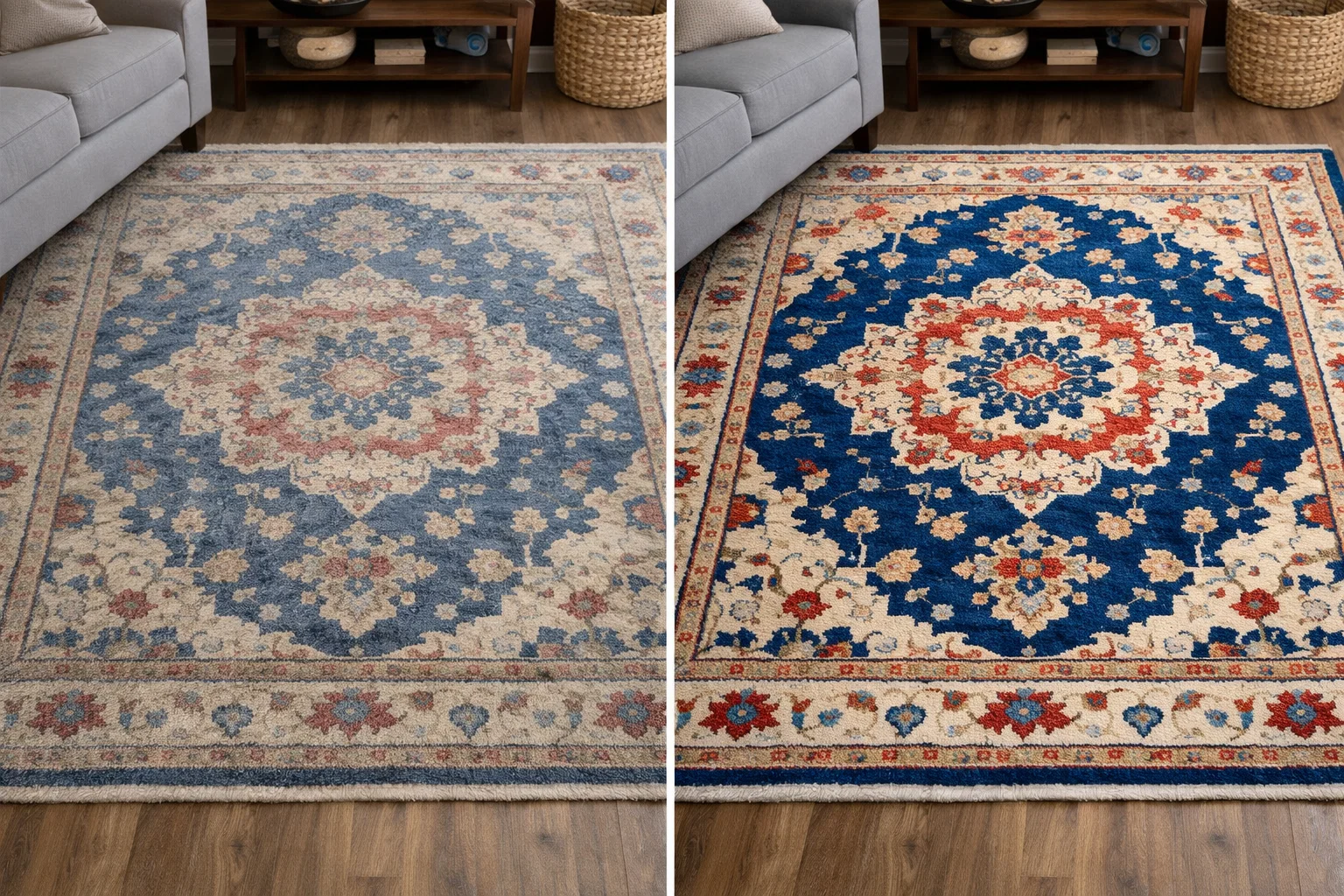
Area rug cleaning in Southeastern Pennsylvania
Angelo’s Carpet Cleaning provides professional area rug cleaning for homeowners in Phoenixville, West Chester, Conshohocken, Pottstown, King of Prussia, Royersford, Collegeville, and nearby Southeastern Pennsylvania communities.
For related services, see our area rug cleaning service, odor removal, and carpet cleaning pages.
FAQ: wool, silk, and synthetic rug cleaning
Can you clean wool rugs without damaging the fibers?
Yes, when the method matches the rug. Wool usually benefits from fiber-safe chemistry, deep soil removal, thorough rinsing, and controlled drying to preserve texture and color.
Do silk rugs require different cleaning than wool rugs?
Often, yes. Silk and silk-like fibers can be more sensitive to moisture, agitation, and dye movement. Testing and gentle methods help preserve sheen and reduce risk.
Why does my rug look dull even after vacuuming?
Vacuuming removes surface soil, but fine grit can settle deep in the pile, especially in wool rugs. Professional dusting and rinsing can remove soil that household vacuums cannot reach.
Is handwashing better than steam cleaning for area rugs?
It depends on the rug. Some rugs do well with controlled hot-water extraction. Others, especially wool, silk, fringe rugs, antique rugs, or odor-affected rugs, may benefit from handwashing or a shop-based process.
How do I prepare my rug for pickup?
Vacuum if possible, take quick photos, note stains or pet accidents, clear a path, and secure pets. Rolling the rug can help, but it is optional if you need assistance.
Can pet odor be removed from an area rug?
Often, yes, but the process depends on the rug fiber, backing, dye stability, and how deeply the contamination traveled. Pet odor may require targeted treatment beyond standard cleaning.
Schedule area rug cleaning with Angelo’s Carpet Cleaning
If your rug needs careful cleaning, odor treatment, or professional inspection, Angelo’s Carpet Cleaning can help determine the safest cleaning approach for the fiber, dyes, and construction.
Ready for help? Contact Angelo’s Carpet Cleaning or call 610-935-7557 to schedule service.


