
Area Rug Cleaning • Homeowner Guide
Area Rug Cleaning: How Professionals Handle Wool, Silk & Synthetic Rugs
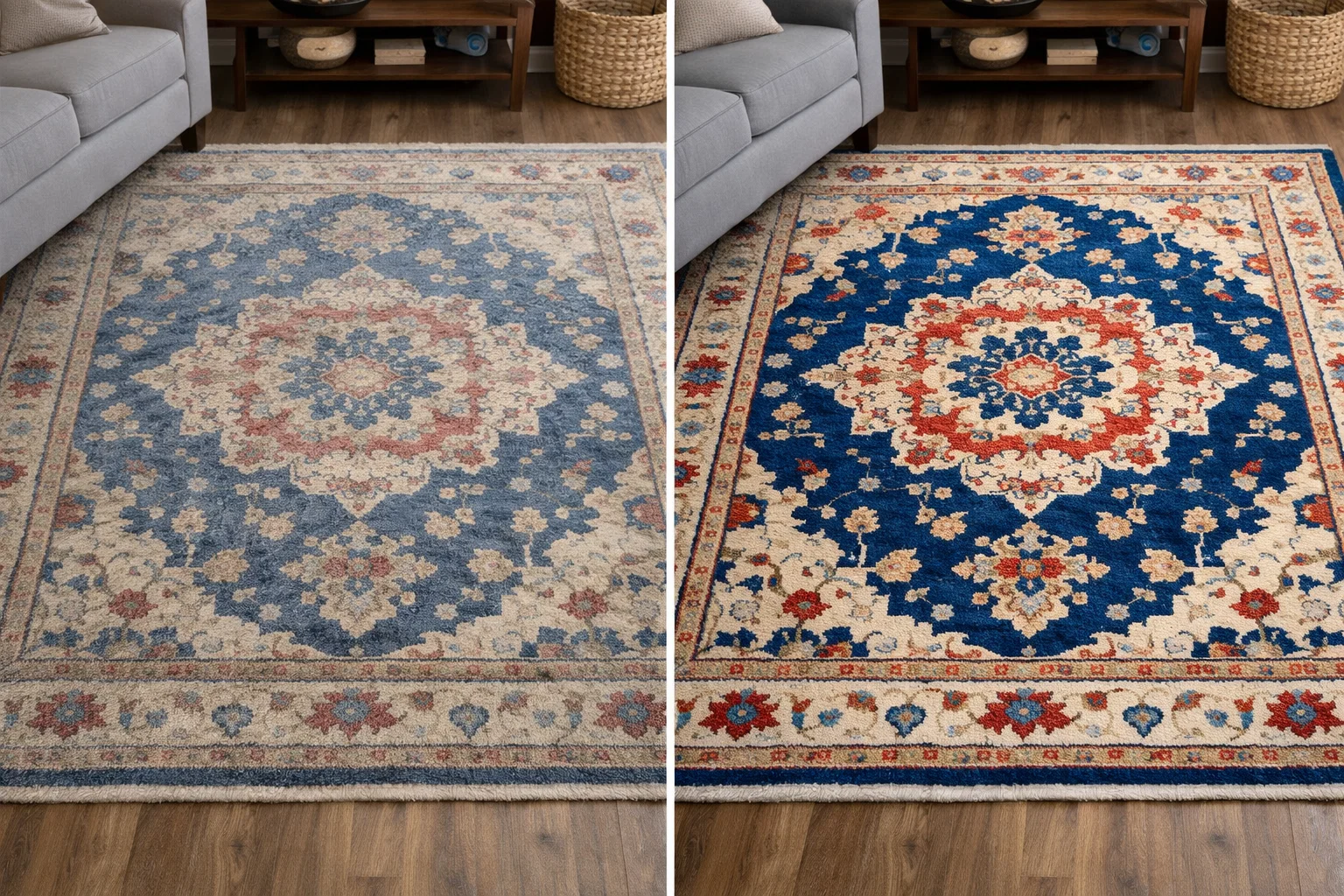
If your rug is valuable (or just important to your home), the biggest risk isn’t “it stays dirty.” The biggest risk is cleaning it the wrong way—over-wetting the foundation, stripping natural fibers, leaving residue behind, or triggering dye bleed on delicate colors. This guide breaks down how professionals approach wool, silk, and synthetic rugs, why some rugs need handwashing, how to prep for pickup or drop-off, and how proper cleaning protects color and texture.

Want service details? Angelo’s provides professional area rug cleaning for wool, silk, synthetics, and more. See: Area Rug Cleaning Services.
Jump to what you need
Why area rugs can’t be cleaned like wall-to-wall carpet
Area rugs aren’t just “carpet you can move.” Many have a foundation (warp/weft), a backing, fringe, specialty dyes, and fibers that react differently to moisture and chemistry than standard carpet. That’s why a method that works on synthetic wall-to-wall carpet can be risky for a wool or silk rug.
Common “damage outcomes” from wrong cleaning
- Dye bleed: colors migrate and create halos or dull patches.
- Texture change: fibers lose their hand-feel, flatten, or get crunchy.
- Shrink / distortion: foundation tightens or edges curl.
- Residue: the rug looks good short-term, then resoils quickly and gets gray.
- Fringe problems: frays, yellows, or stays dirty because it wasn’t truly cleaned.
High-risk rugs: Antique/vintage rugs, bright reds/blues, hand-knotted pieces, silk or “silk-like” fibers, and rugs with heavy pet accidents. These are the rugs where professional testing and controlled methods matter most.
Wool vs silk vs synthetic: what changes (and why it matters)
Professional rug cleaning starts with a simple question: What is this rug made of? Material impacts pH tolerance, moisture tolerance, dye stability, and even how soil binds to the fiber.
Wool rugs
- Natural fiber with “spring” and warmth
- Can hold fine soil deep in the pile
- Prefers fiber-safe chemistry and controlled drying
Silk rugs
- Luxury fiber with delicate sheen
- Higher risk of dye bleed and texture change
- Often needs gentler, lower-moisture handling
Synthetic rugs (nylon / polyester / polypropylene)
Many synthetics can tolerate deeper rinsing, but they still need the right process. Some are tufted with adhesives, some have latex backings, and many hold oily soil that DIY cleaners smear rather than remove.

Why some rugs need handwashing (and why it preserves color and fibers)
“Handwashing” doesn’t mean a quick scrub with a brush. It means a controlled wash process where the rug is treated with appropriate chemistry, gently agitated, thoroughly rinsed, and dried in a way that protects the foundation and dyes. For many wool and silk rugs—especially valuable or older pieces—handwashing can be the safest way to remove embedded soil without stressing the rug.
When handwashing is often the right call
- Valuable wool rugs with deep soil that regular surface cleaning can’t fully remove.
- Silk or fine “highlight” areas that can distort or dull under aggressive methods.
- Rugs with fringe that needs detailed cleaning (often best handled in a shop setting).
- Pet accidents / odor issues where contamination may be deeper than the surface.
- Rugs with unstable dyes that require careful, tested approaches.

Heads up on “viscose / bamboo silk” rugs: These can be very easy to damage. They often require extra caution and realistic expectations because the fiber can change texture or show water marks more easily than wool or true silk.
A professional rug cleaning process (step-by-step)
While the exact method depends on fiber, dyes, age, and construction, professional rug cleaning is typically a multi-step process designed to protect the rug—not just “make it look better today.” The goal is to remove dry soil, suspend and rinse away bonded soil, and finish with a clean, soft feel that doesn’t attract rapid resoiling.
- Inspection & identification. Fiber type, construction (hand-knotted, tufted, machine-made), fringe condition, prior damage, and stain history.
- Dye testing (colorfastness). Confirm which cleaning approach is safe for the rug’s colors.
- Dry soil removal (dusting). This is huge for rugs—fine grit often lives deep in the pile.
- Pre-treatment. Apply the right pre-spray/solution to loosen soils and spots.
- Wash method selection. Handwash, hot-water extraction, low-moisture cleaning, or a combination—based on the rug.
- Edges & fringe detailing. Fringe and edges often require special attention for a true “finished” look.
- Thorough rinsing. A clean rug isn’t just “washed”—it’s rinsed so residues don’t attract soil.
- Controlled drying. Proper airflow and drying methods help preserve foundation shape and reduce odor risk.
- Grooming / finishing. Set pile direction and restore a uniform appearance.
- Final review. Confirm the rug looks, feels, and presents the way it should.

How pros approach each rug type
Silk rug cleaning (and silk highlights)
Silk rugs (or rugs with silk highlights) are often about sheen and detail—so preserving texture is just as important as removing soil. Because dyes can be more sensitive, silk rugs typically require more cautious testing and gentler handling to preserve the rug’s look and feel.

Synthetic rug cleaning
Synthetic rugs can still hold a lot of soil—especially in busy rooms. Many synthetics respond well to thorough rinsing, but construction matters: some tufted rugs and latex-backed rugs can be sensitive to over-wetting or aggressive methods. A professional process balances soil removal with protection of the backing and edges.

How to prep your rug for pickup or drop-off
A little prep helps your appointment go smoothly and helps the cleaning team focus on what matters—safe handling and great results. If you’re scheduling pickup, the biggest goals are: make access easy and communicate any special concerns.
- Vacuum both sides if possible. This removes loose grit and hair so deeper cleaning can focus on embedded soil.
- Take quick photos. Especially for valuable rugs, a before photo helps track condition and any existing wear.
- Note stains or concerns. Point out pet accidents, beverage spills, or any “mystery spots.”
- Check for fringe and loose edges. Mention fraying, unraveling, or weak corners.
- Clear a path. Move small furniture, plants, or breakables so the rug can be safely handled.
- Secure pets. Keeping pets comfortable in another room makes pickup faster and safer for everyone.
- Roll if you can (optional). If you’re able to roll the rug neatly, it can speed up pickup. If not, the team can help.

Aftercare: keeping your rug clean longer
Professional cleaning restores the rug—aftercare keeps it that way. The best “long rug life” routine is simple: reduce grit, protect the foundation, and even out wear.
- Use a quality rug pad. It reduces slip, cushions the pile, and helps protect the foundation.
- Vacuum regularly. Fine grit is what dulls color and wears fibers over time.
- Rotate the rug. Turn it every few months so traffic patterns don’t permanently “track” the pile.
- Blot spills early. Don’t over-wet; avoid scrubbing; and avoid leaving soap residue behind.
- Address pet accidents fast. If odor is involved, consider odor treatment services: Odor Removal Treatments.
FAQ
Can you clean wool rugs without damaging the fibers?
Yes—when the method matches the rug. Wool typically benefits from fiber-safe chemistry, deep soil removal, thorough rinsing, and controlled drying to preserve texture and color.
Do silk rugs require different cleaning than wool rugs?
Often, yes. Silk and silk-like fibers can be more sensitive to moisture and dyes may be less stable. Testing and gentle methods help preserve sheen and reduce the risk of dye issues.
Why does my rug look “dull” even after vacuuming?
Vacuuming removes surface soil, but fine grit can settle deep in the pile—especially in wool rugs. Professional dusting and rinsing remove what household vacuums can’t reach.
Is handwashing better than steam cleaning for area rugs?
It depends on the rug. Some rugs do well with controlled hot-water extraction. Others—especially wool, silk, or rugs with fringe/odor—may benefit from handwashing or a shop-based process that allows deeper cleaning and detailed finishing.
How do I prep my rug for pickup?
Vacuum if possible, take quick photos, note stains or pet accidents, clear a path, and secure pets. Rolling the rug can help, but it’s optional if you need assistance.