
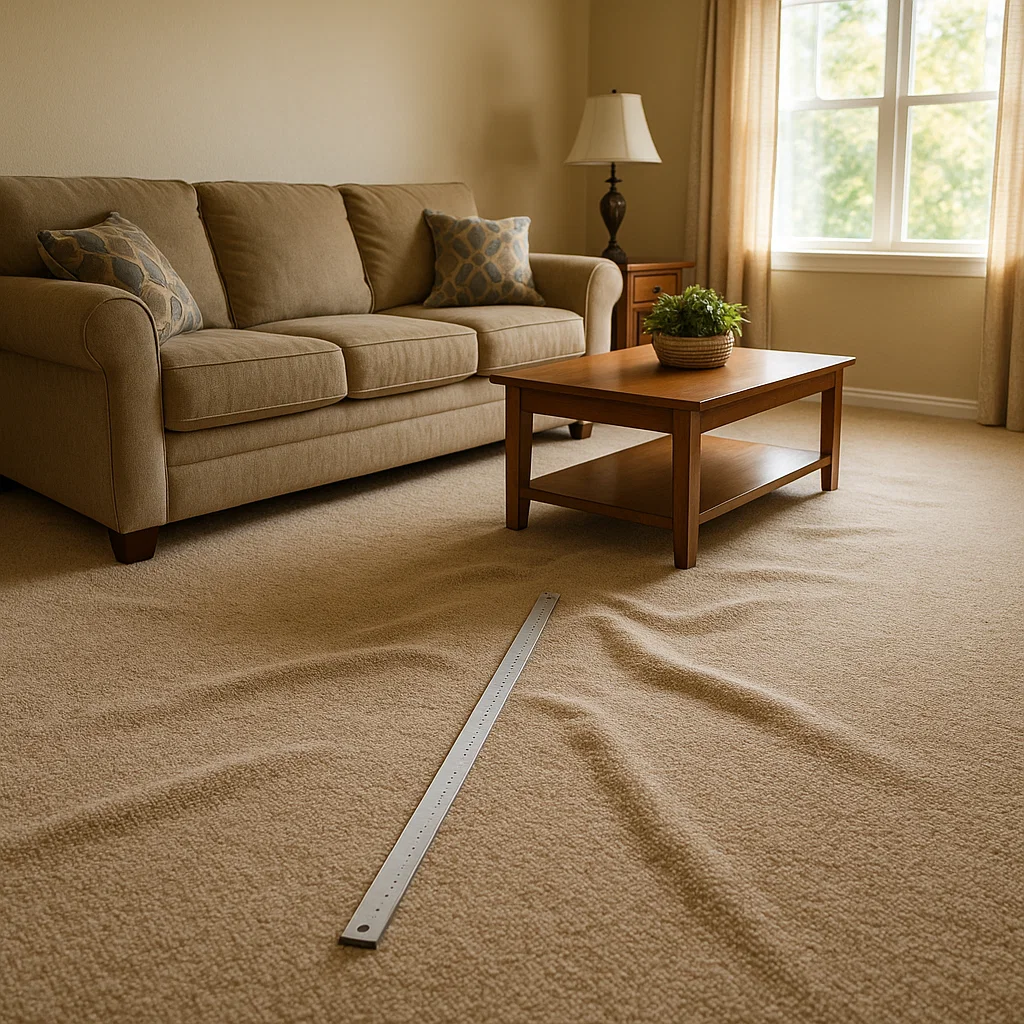
Carpet ripples and wrinkles are usually a tension problem, not a cleaning problem. When wall-to-wall carpet relaxes or shifts off the tack strip, it can form waves, bumps, and loose areas across the room. Professional power stretching restores a flatter, safer surface and helps the room look finished again.
Why carpet ripples happen
Wall-to-wall carpet is installed under tension so the backing stays flat and locked onto the tack strip around the room. If that tension relaxes, the carpet can develop ripples or speed bumps across traffic lanes.
Common triggers include furniture drag, high humidity, a loose or aging pad, heavy traffic, and installations that relied too much on a knee kicker instead of a full power stretcher. Once the carpet begins to move, the loose areas can become more noticeable over time.
How we fix it: proper stretching, not shortcuts
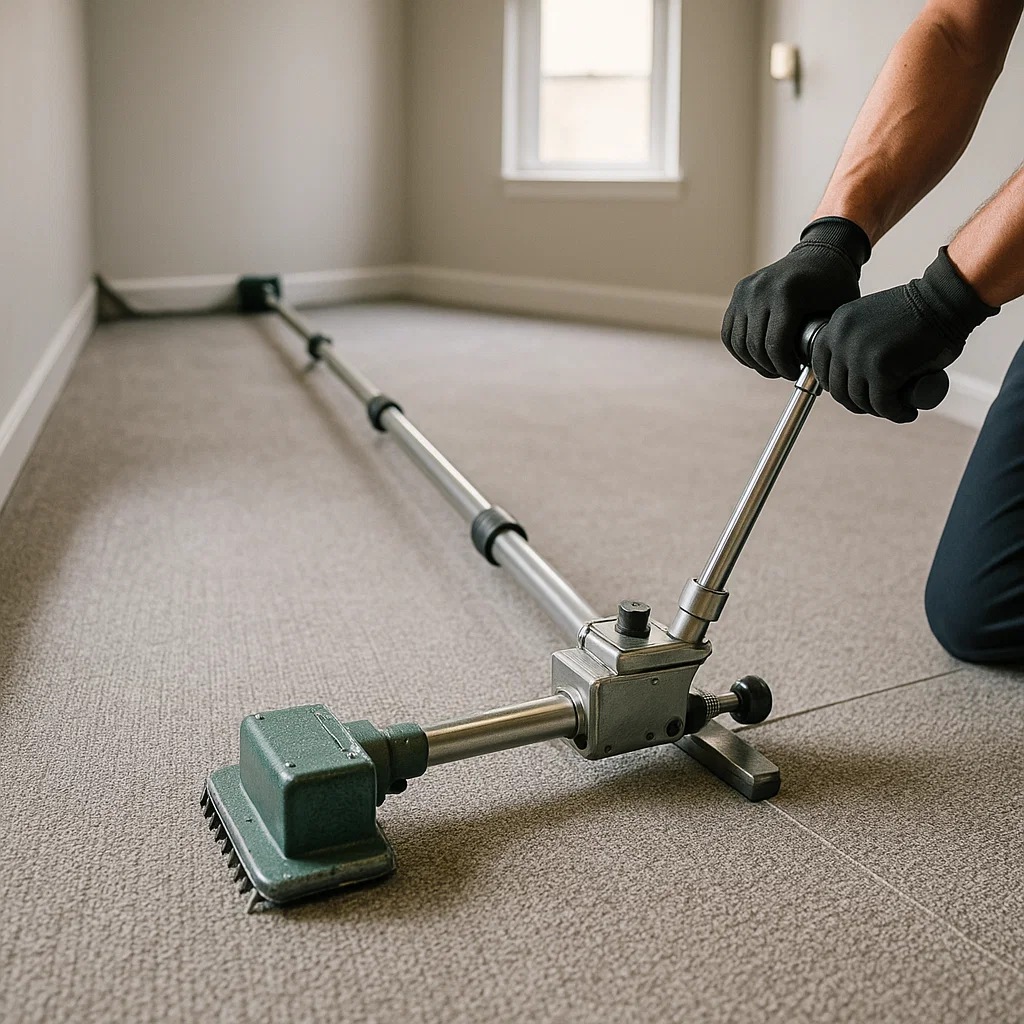
Professional carpet stretching restores the original tension using a power stretcher that spans the room. The tool distributes force evenly so the backing moves as a sheet instead of forming small waves. The carpet is stretched along the longest dimension first, then across the shorter dimension as needed to remove cross ripples.
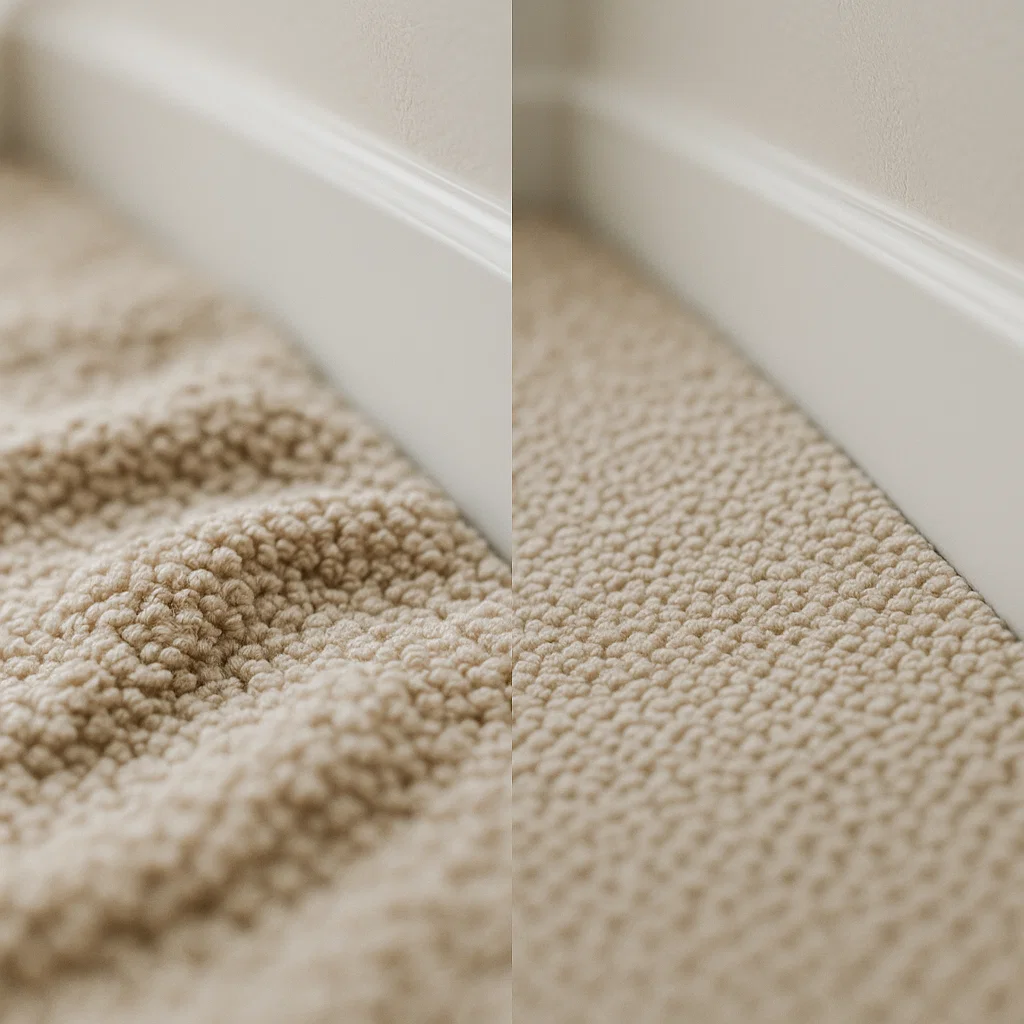
Once the carpet is flat, the small amount of excess is trimmed along the edge and tucked neatly onto the tack strip. Door thresholds are re-seated, transitions are checked, and seams are inspected for a clean finish.
What about wrinkles that keep coming back?
Recurring ripples usually point to a root cause that needs to be addressed, not just stretched flat again. The most common causes are pad failure, humidity-related movement, or installation constraints that prevented the carpet from being stretched properly the first time.
- Pad problems: A soft, loose, or aging pad can allow the carpet to travel.
- Humidity movement: Moisture changes can swell backing and allow shifting.
- Installation issues: Carpet that was not power-stretched during installation may relax sooner.
Safety and aesthetics
Ripples are more than cosmetic. They can catch bare feet, bunch under office chairs, and make vacuums chatter. Sunlight can also exaggerate ripples, especially near large windows. Power stretching helps restore the clean, even appearance you remember while reducing trip hazards.
Our step-by-step approach
- Inspect the room, ripples, seams, tack strip, and transitions.
- Move or shift furniture as needed when it is safe to do so.
- Release the carpet edge where stretching is required.
- Use a power stretcher to restore proper tension across the room.
- Trim excess carpet and tuck the edge neatly back into place.
- Re-seat thresholds and review seams or problem areas.
- Groom and reset the room for a clean finish.
How to keep ripples from returning
- Avoid dragging heavy furniture across carpet.
- Use furniture sliders when moving large pieces.
- Maintain stable indoor humidity when possible.
- Address pad problems when they are found.
- Schedule professional stretching at the first signs of loose carpet.
When stretching is not enough
If the primary or secondary backing is delaminating, seams are heat-damaged, or the pile is worn down to the backing in traffic lanes, stretching will not hide the wear. In those cases, spot repairs or replacement may be the better recommendation.
The goal is to stretch when it makes sense and save money when possible, while being candid when new carpet will truly look and perform better.
Power stretcher vs. knee kicker: what is the difference?
A knee kicker is a small tool meant for positioning carpet into edges and working in tight areas or stairs. It concentrates force into a small area. A power stretcher spans the room with poles and spreads the force across a larger head that grips the carpet. That even pull is what removes waves without creating new ones.
A knee kicker still has a purpose, but it should not replace a power stretcher for room-wide wrinkle removal.
What you will hear and feel during stretching
Clicks from the stretcher are normal as tension increases. You may briefly see the pile ruffle where the stretcher head engaged; that is groomed out at the end. Freshly stretched carpet can feel tighter underfoot for a day or two before it settles into a smooth, quiet surface.
Cost factors
- Room size and layout
- Amount and weight of furniture
- Number of ripples and direction of pulls needed
- Condition of seams, thresholds, and tack strip
- Whether repairs or cleaning are combined with stretching
What we bring to the job
- Power stretcher for proper room-wide tension
- Knee kicker for careful positioning
- Trimming and tuck tools for clean edges
- Furniture sliders when appropriate
- Tools for threshold and transition detailing
After-care tips
- Walk on the carpet normally after the room is reset.
- Avoid dragging heavy furniture across newly stretched areas.
- Vacuum as usual once the carpet is groomed.
- Schedule cleaning after stretching if both services are needed.
- Call if a ripple returns under normal use so the cause can be assessed.
Common myths
Myth: Carpet ripples can be cleaned away
Cleaning can remove soil and improve texture, but it will not restore carpet tension. Ripples need proper stretching.
Myth: A knee kicker is enough for every room
A knee kicker is useful for positioning, but a power stretcher is the right tool for room-wide tension.
Myth: Ripples mean the carpet must be replaced
Many rippled carpets can be stretched successfully if the backing, pad, seams, and fibers are still in workable condition.
Small case studies
Living room with ripples across the traffic lane
When the carpet is still structurally sound, power stretching can remove the waves, improve safety, and help the vacuum glide smoothly again.
Bedroom with carpet loose near the wall
If the edge has lifted from the tack strip, the carpet can often be re-stretched, trimmed, and tucked for a cleaner finish.
Room with ripples and worn traffic lanes
Stretching can flatten the carpet, but it will not replace missing fiber. Cleaning or replacement may also be part of the discussion depending on the carpet’s condition.
FAQ
Will the trimmed edge show?
No. The trimmed edge is tucked onto the tack strip and brushed to blend with the adjacent pile. Once groomed, the edge should disappear.
Can furniture stay in the room?
Many pieces can be shifted using sliders. Heavy, delicate, or built-in items may stay in place while the technician outlines the best plan during inspection.
How long does carpet stretching take?
Many living rooms take about 60 to 90 minutes depending on size, furniture, and how many pulls are needed.
Quick recap
Carpet ripples usually happen when carpet loses tension. Professional power stretching restores a flatter, safer surface by pulling the carpet evenly, trimming excess material, and re-tucking edges cleanly. If the backing, seams, pad, or fibers have failed, repair or replacement may be the better long-term choice.


