
Disinfectant Fogging • How It Works
Disinfectant fogging service: how ULV fogging works
Disinfectant fogging can be a useful add-on when you want broader surface coverage in a space, especially after illness, during seasonal germ concerns, before move-in, or in shared areas. But fogging is not a substitute for cleaning.
This guide from Angelo’s Carpet Cleaning explains how ULV disinfectant fogging works, the difference between cleaning and disinfecting, when fogging may be helpful, and what a safe, label-guided process should include.
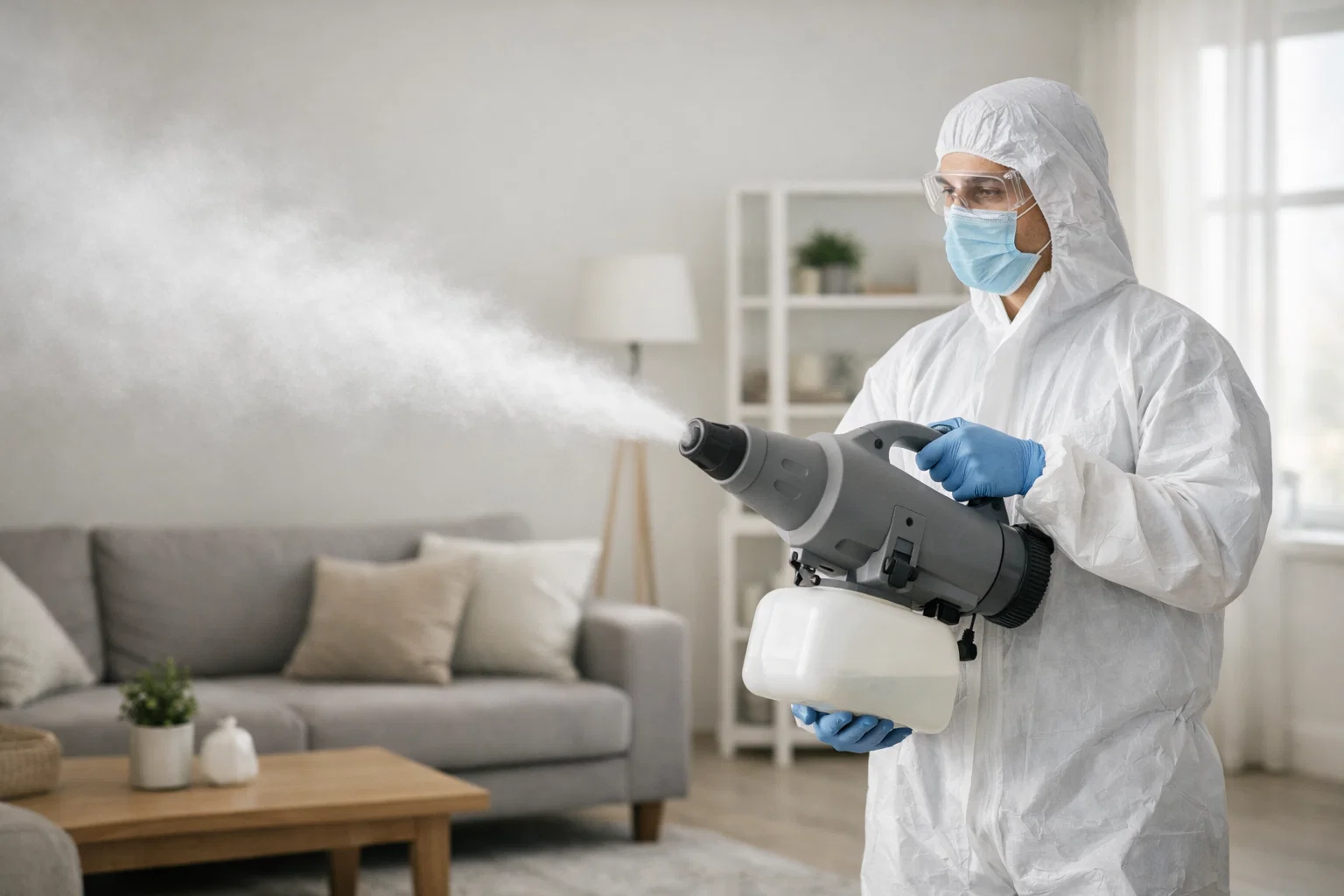
Quick answer: what does ULV disinfectant fogging do?
ULV fogging applies disinfectant in very fine droplets for broader surface coverage. It works best after cleaning high-touch and visibly soiled areas first. A reliable fogging plan should follow product label directions, allow proper dwell time, keep people and pets out during application, and ventilate before normal use.
Important: disinfectant fogging can help reduce germs on treated surfaces when products are used according to label directions, but no process can promise to remove every germ or prevent illness.
What ULV fogging is
ULV stands for Ultra-Low Volume. In plain terms, it means applying a disinfectant as a fine mist made of small droplets. The goal is to reach broad surface areas without soaking the space.
ULV fogging is best understood as a coverage tool. It can help apply disinfectant across surfaces in a room, but it does not replace wiping, vacuuming, cleaning, or soil removal.
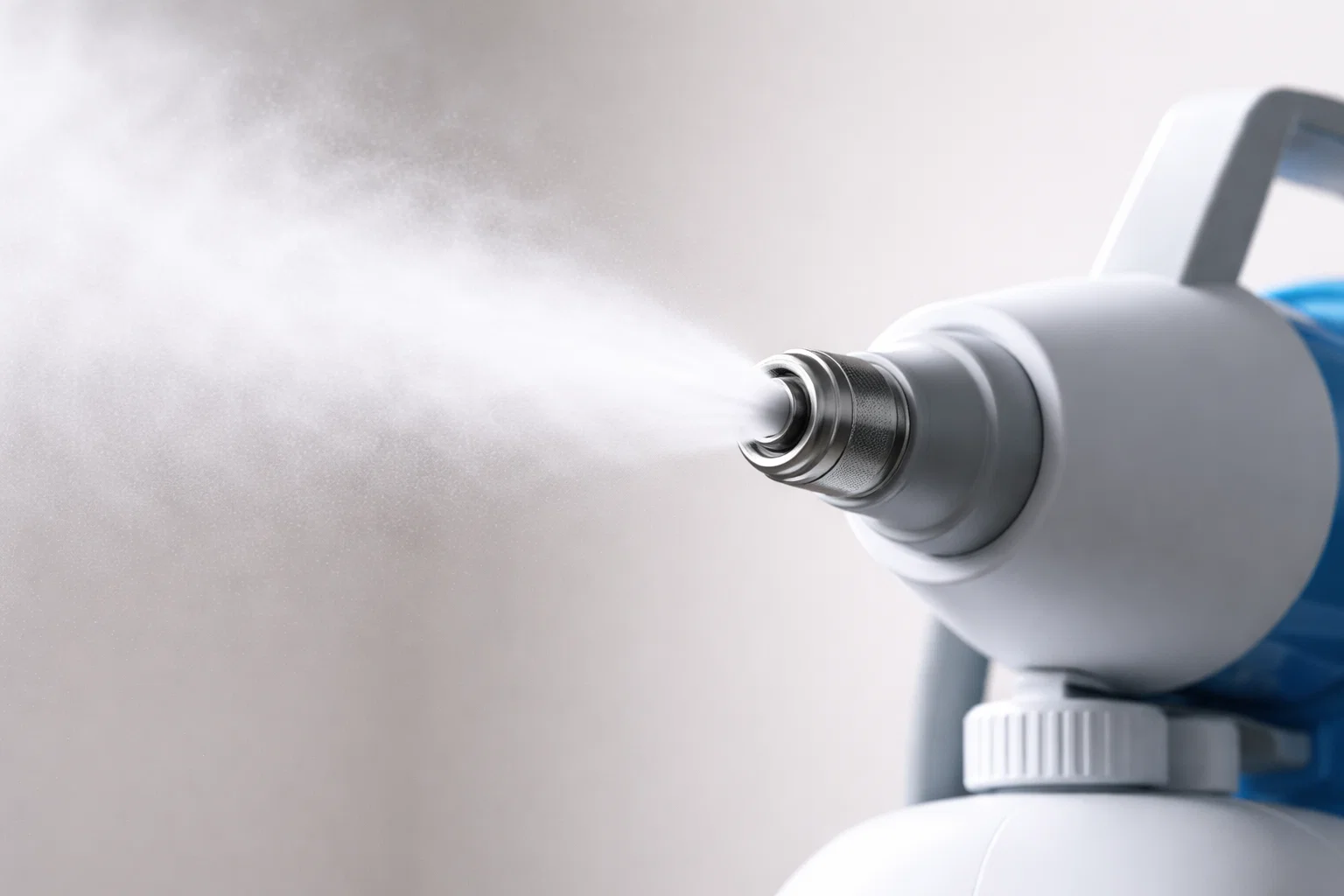
What disinfectant fogging does not do
Fogging does not remove dirt, grease, dust, food residue, body oils, or grime. If a surface is visibly dirty, disinfectant may not contact the surface properly. That is why cleaning first is an important step.
- Fogging does not replace routine cleaning.
- Fogging does not scrub high-touch surfaces.
- Fogging does not remove dust or soil from carpets, upholstery, or floors.
- Fogging should not be used as a shortcut when surfaces need cleaning first.
Cleaning vs. disinfecting: the difference that matters
People often use the words cleaning and disinfecting interchangeably, but they are different steps.
- Cleaning removes dirt, soil, dust, residue, and some germs by physically removing them from surfaces.
- Disinfecting uses a product labeled for disinfecting to reduce specific germs on treated surfaces when used according to directions.
For most situations, the best approach is to clean first, especially high-touch or visibly soiled surfaces, then disinfect using the correct product, coverage, dwell time, and safety steps.
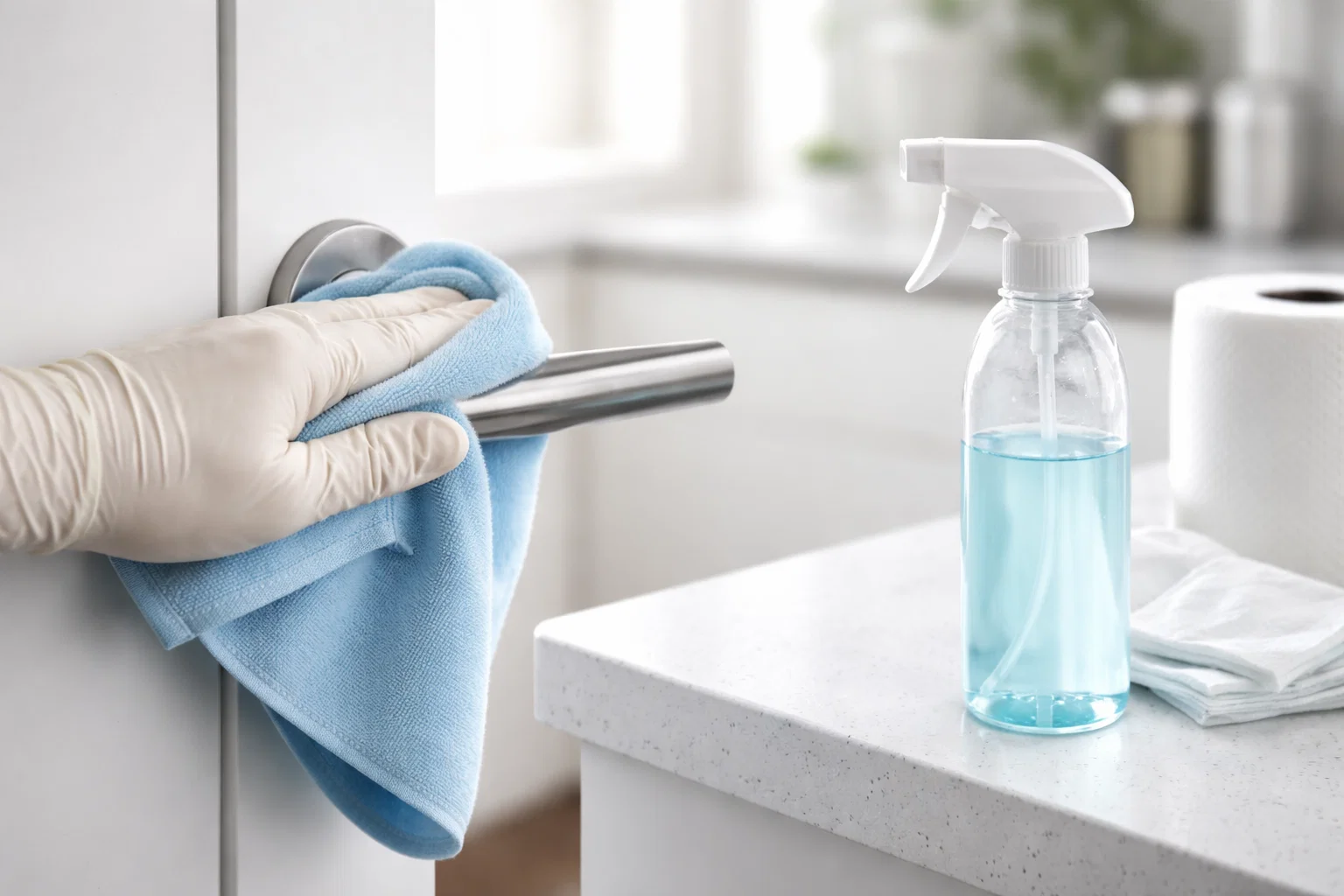
Why cleaning first improves results
Disinfectants need contact with the surface to work as intended. Dust, oils, spills, and grime can interfere with that contact. Pre-cleaning high-touch areas helps the disinfectant reach the surface more effectively.
When disinfectant fogging may make sense
Fogging may be useful when you want broader disinfectant coverage as part of a larger cleaning and disinfecting plan. It is most often considered for shared spaces, move-in resets, post-illness situations, or seasonal cleaning routines.
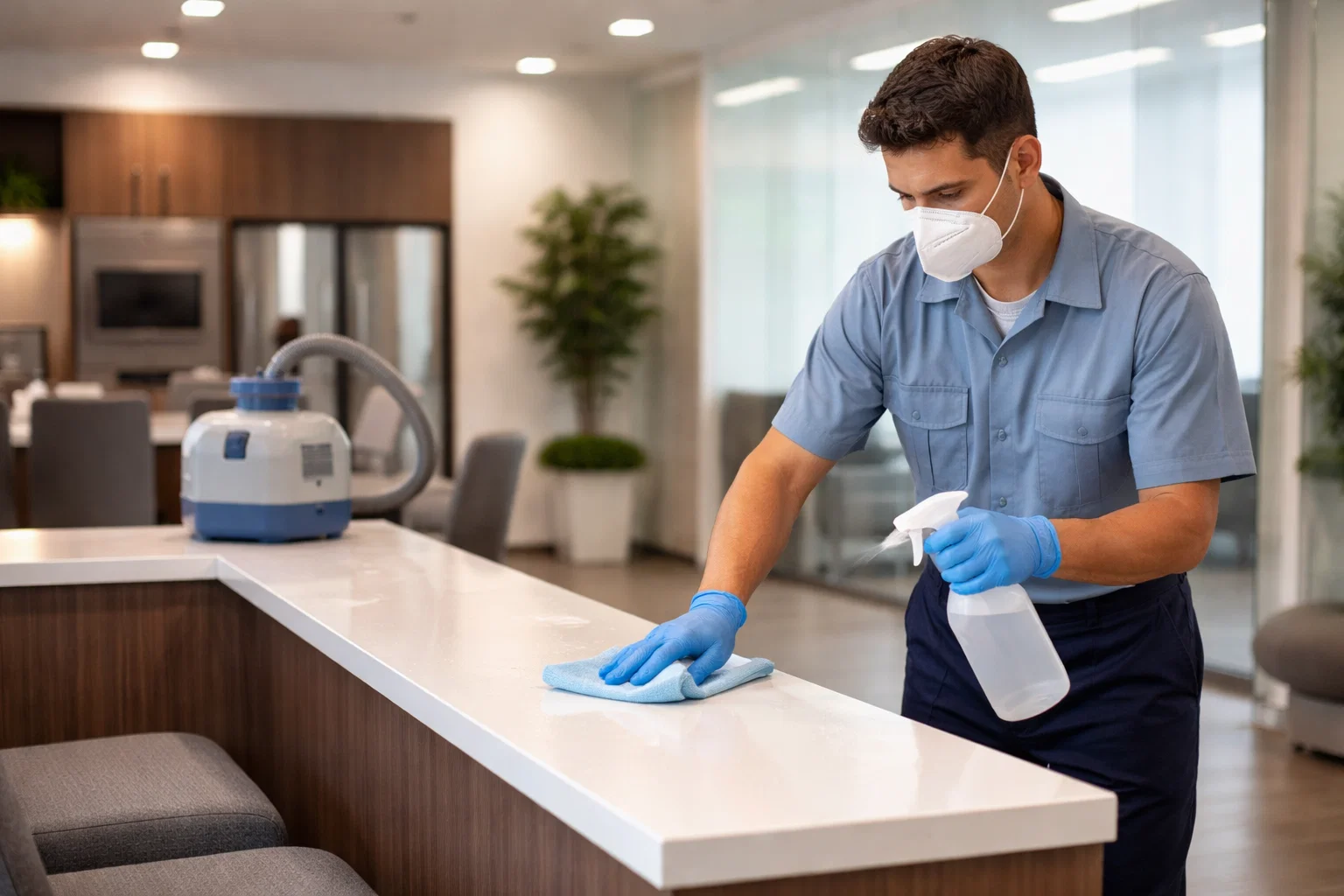
After illness in the home
After someone has been sick, start with cleaning high-touch areas such as doorknobs, switches, counters, faucets, remotes, handles, and bathroom surfaces. Fogging may then be considered as an added layer for broader surface coverage.
Move-in or move-out reset
When moving into a new home, you may not know how thoroughly the space was cleaned before. A clean-and-disinfect plan can help reset high-touch areas before normal use. You may also want to pair this with a move-in or move-out carpet cleaning checklist for floors and soft surfaces.
Shared spaces and seasonal concerns
In shared rooms, offices, waiting areas, or busy family spaces, fogging may be used as part of a broader routine that includes cleaning, ventilation, and regular attention to high-touch surfaces.
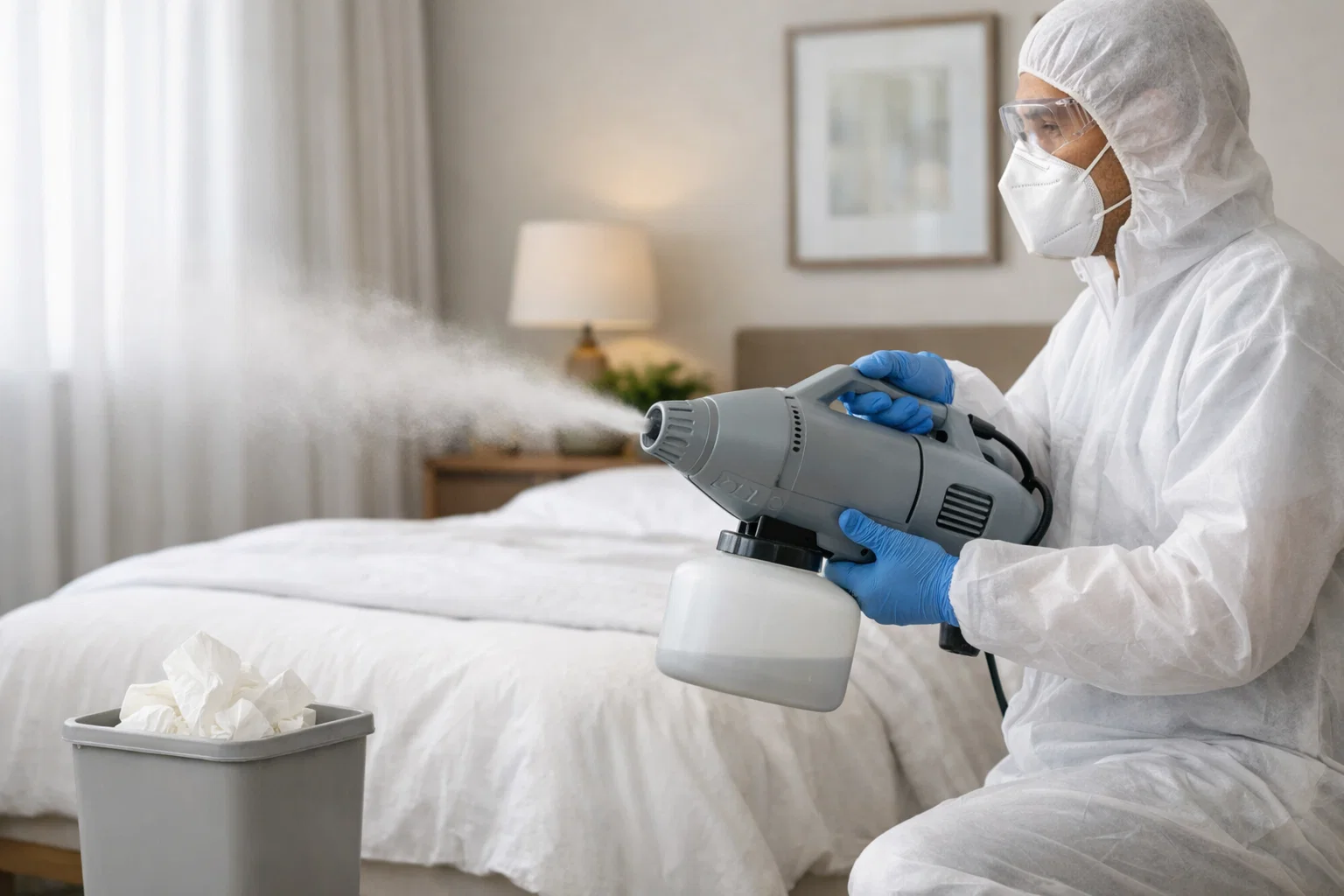
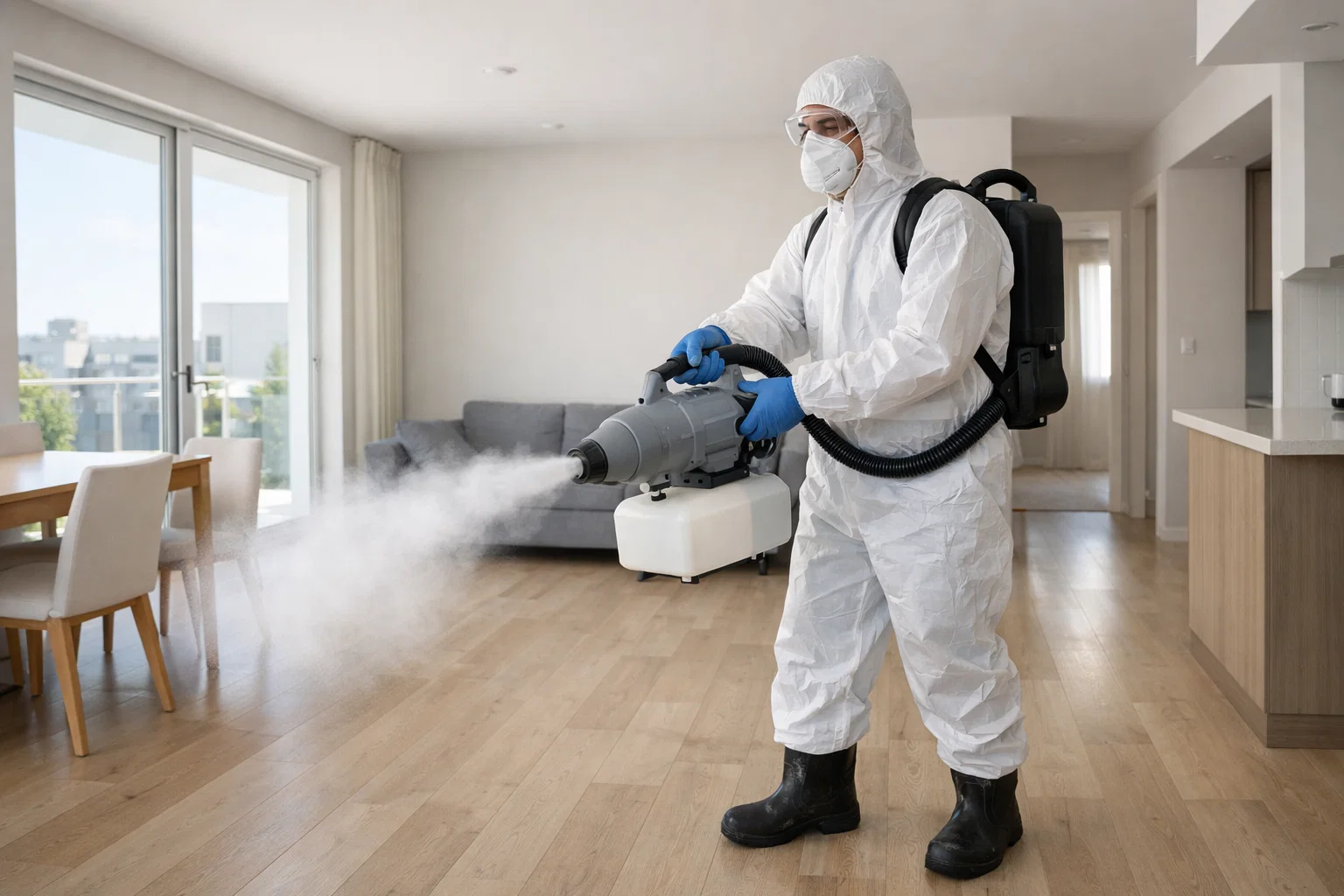
A safe, reliable fogging process
A responsible fogging process should be methodical, product-label guided, and focused on safety. It should not be treated as a one-step magic fix.
- Assess the space: identify room layout, high-touch areas, ventilation, sensitive materials, and safety needs.
- Clean first where needed: remove visible soil and clean high-touch surfaces before disinfecting.
- Use label-guided chemistry: disinfectant products should be used according to label directions.
- Apply evenly: ULV fogging should aim for appropriate coverage without over-wetting.
- Allow dwell time: treated surfaces need the correct contact time specified by the product label.
- Ventilate before re-entry: air out the space according to product guidance and service instructions.
- Resume normal cleaning: fogging works best as part of ongoing cleaning and maintenance.
For related cleaning support, see Angelo’s Carpet Cleaning services for carpet cleaning, upholstery cleaning, and tile and grout cleaning.
Safety checklist for people, pets, and ventilation
Fogging should always follow product instructions and safe handling practices. A reliable provider will explain preparation, application, dwell time, ventilation, and re-entry expectations before the service begins.
- Keep people and pets out of the treatment area during application.
- Follow all product-label guidance for dwell time and re-entry.
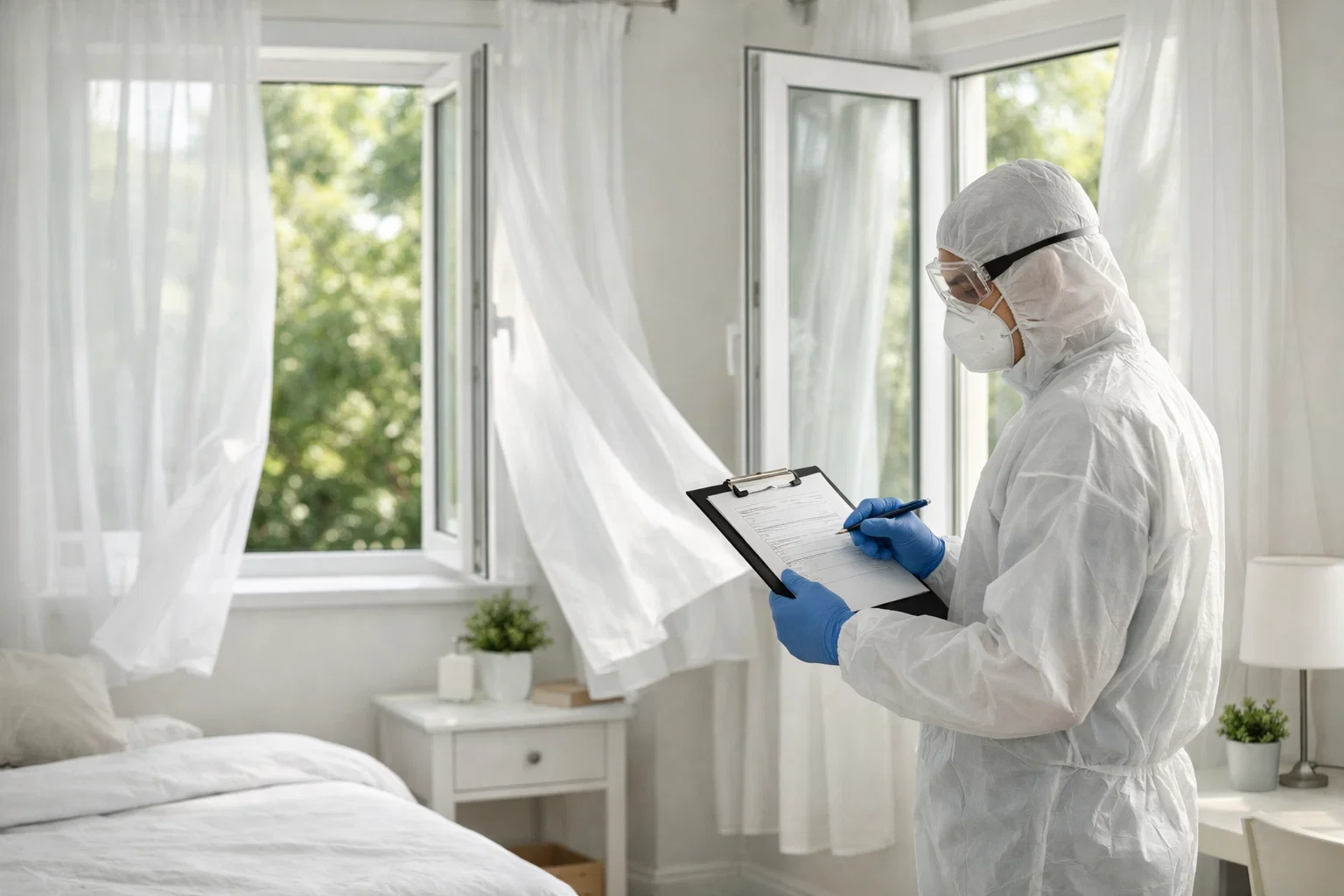
- Ventilate the space before normal use.
- Remove or protect sensitive items when advised.
- Tell the provider about respiratory sensitivities, delicate surfaces, aquariums, plants, or special concerns before service.
Quick decision guide: do you need fogging or just cleaning?
Use this general guide to decide what kind of service may make sense:
- Visible dirt, stains, dust, grease, or residue: clean first.
- Carpet, rugs, upholstery, or tile look dirty: schedule the appropriate cleaning service first.
- High-touch surfaces after illness: clean first, then disinfect targeted surfaces.
- Move-in reset or shared space: cleaning plus disinfectant fogging may be useful as a broader surface-coverage step.
- Ongoing prevention: routine cleaning, hand hygiene, ventilation, and high-touch surface care remain important.
Disinfectant fogging in Southeastern Pennsylvania
Angelo’s Carpet Cleaning serves homeowners and local spaces in Phoenixville, West Chester, Conshohocken, Pottstown, King of Prussia, Royersford, Collegeville, and nearby Southeastern Pennsylvania communities.
If you are planning a move-in reset, post-illness cleaning, or broader surface disinfecting plan, our team can help you understand what cleaning steps should come first and what to expect before, during, and after service.
FAQ: disinfectant fogging and ULV fogging
Is fogging the same as cleaning?
No. Cleaning removes dirt, dust, residue, and some germs by physically removing them. Fogging applies disinfectant for broader surface coverage, but it does not remove soil or replace cleaning.
Do surfaces need to be cleaned before fogging?
Often, yes. Visibly soiled and high-touch surfaces should be cleaned first so disinfectant can contact the surface properly and meet product-label requirements.
When is disinfectant fogging useful?
Fogging may be useful for post-illness cleaning, move-in resets, seasonal concerns, and shared spaces when broader disinfectant coverage is desired as part of a larger cleaning plan.
How long before I can re-enter after fogging?
Re-entry timing depends on the product used, label directions, dwell time, ventilation, and space conditions. A professional service should explain the expected timeline before treatment.
Is disinfectant fogging safe for pets?
Pets should be kept out of the treatment area during application and until re-entry guidance has been met. Tell the provider about pets, aquariums, birds, or sensitive animals before service.
Does fogging kill every germ?
No process should promise that. The goal is label-guided disinfectant application to help reduce targeted germs on treated surfaces, paired with routine cleaning practices for best results.
Schedule cleaning and disinfecting support
If you are planning a post-illness reset, move-in cleaning, or broader disinfecting service, Angelo’s Carpet Cleaning can help you choose a practical, safety-focused plan.
You can also contact Angelo’s Carpet Cleaning or call 610-935-7557 to discuss service options.


