
Most homes should schedule dryer vent cleaning once a year. Busy households, homes with shedding pets, and long or complicated vent runs may need service every six months. The right schedule depends on laundry volume, duct design, airflow, and how quickly lint builds up.
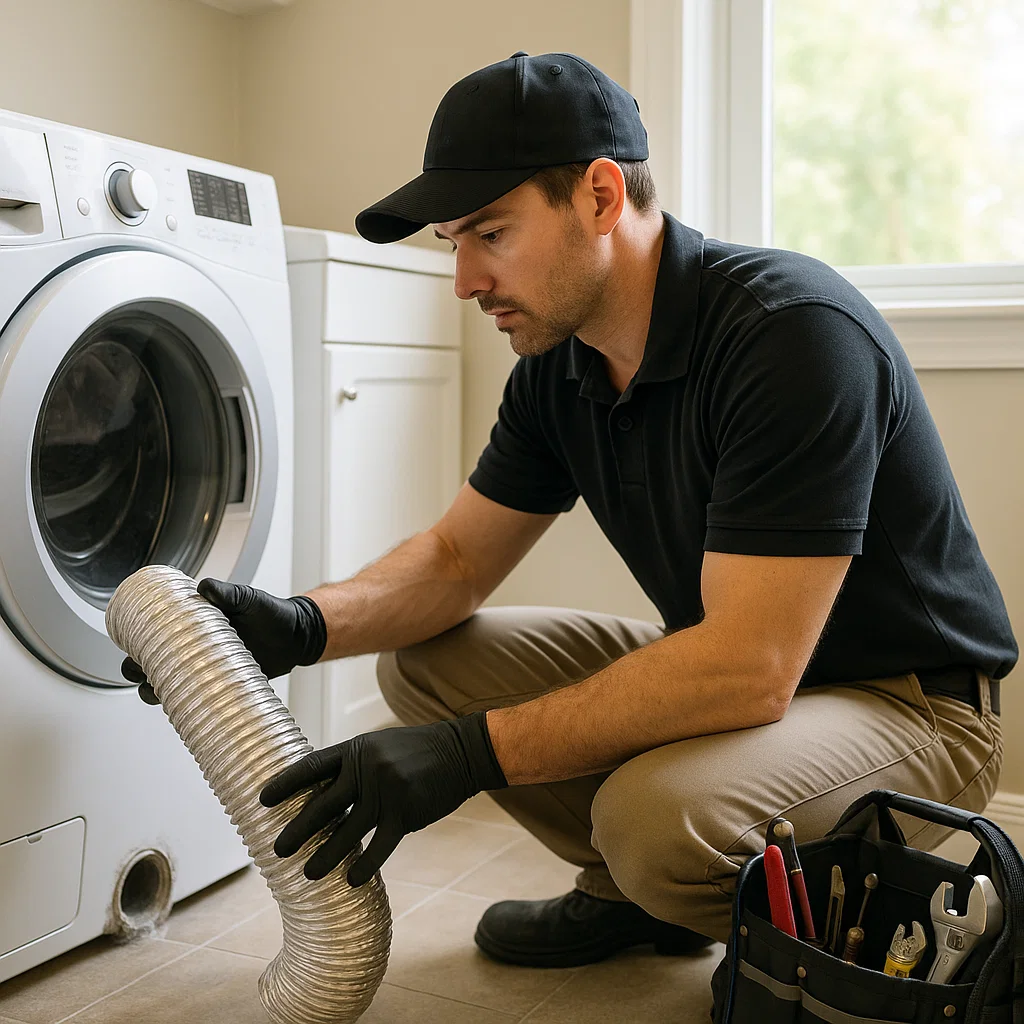
How often should a dryer vent be cleaned?
Most homes should schedule a full dryer vent cleaning every 12 months. If you do laundry for a large household, dry lots of towels and bedding, have shedding pets, or your duct run is long with multiple elbows, plan on every six months.
Lint can begin collecting at elbows and exterior hoods well before the two-year mark. As airflow resistance builds, dry times creep up, heat increases, and the dryer has to work harder than intended.
Why some homes need more frequent cleaning
- Large households: More laundry means more lint moving through the system.
- Pets: Pet hair and dander add to lint buildup.
- Long duct runs: Longer routes give lint more places to settle.
- Multiple elbows: Turns slow airflow and encourage deposits.
- Roof terminations: These can be harder to access and may need closer monitoring.
- Heavy towel and bedding loads: Bulky fabrics produce more lint and moisture.
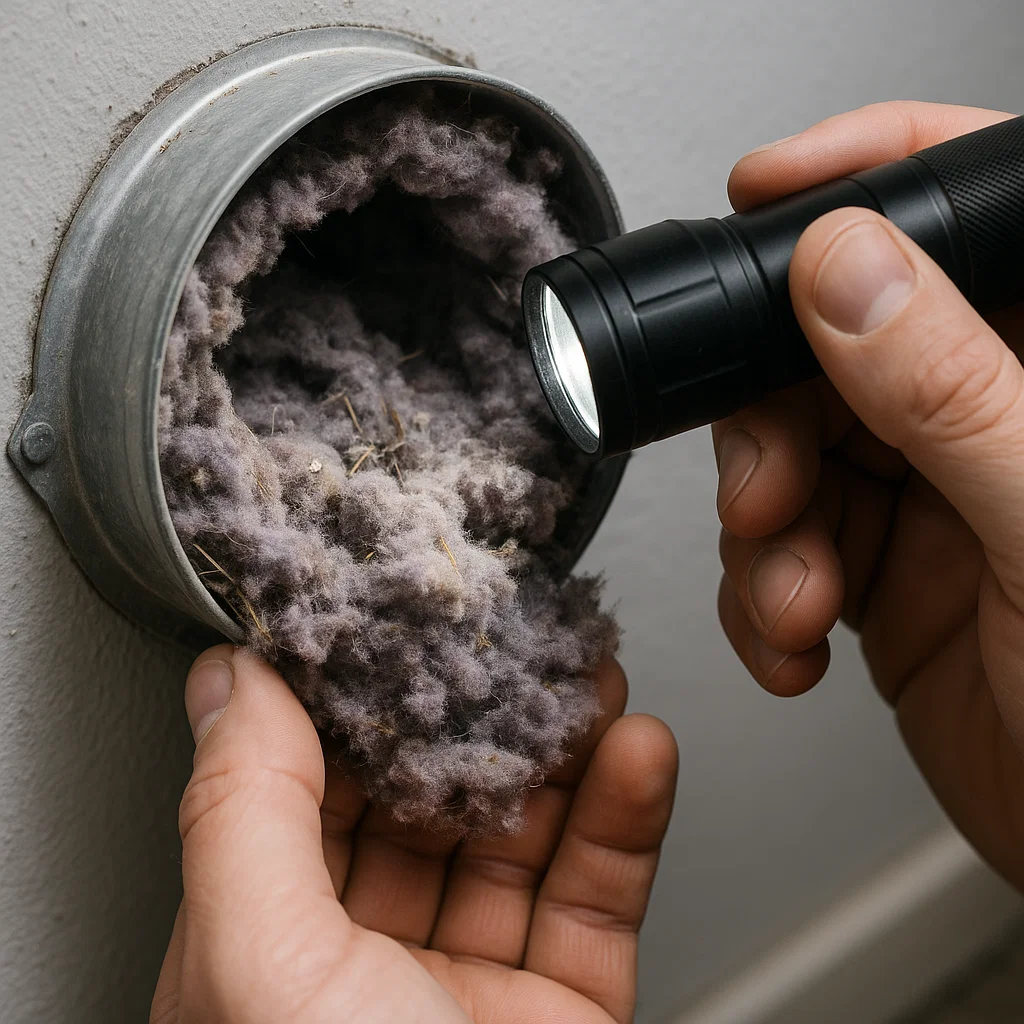
7 signs your dryer vent is overdue
- Clothes take longer than normal to dry.
- Towels or jeans need a second cycle.
- The dryer or laundry room feels unusually hot.
- There is a burning or musty smell during drying.
- The exterior vent flap barely opens while the dryer runs.
- Lint appears around the dryer, behind the machine, or near the exterior hood.
- The dryer shuts off early or shows airflow warnings.
What professional dryer vent cleaning includes
- Inspection of the dryer connection and accessible vent route
- Cleaning lint and debris from the duct system
- Checking airflow at the exterior termination
- Clearing lint from the exterior hood or damper area
- Looking for crushed transition ducts, disconnected sections, or airflow restrictions
- Recommendations for maintenance or upgrades if the route is problematic
Between-visit care that keeps results longer
- Clean the lint screen before every load.
- Do not overload the dryer.
- Keep the area behind the dryer free of lint and clutter.
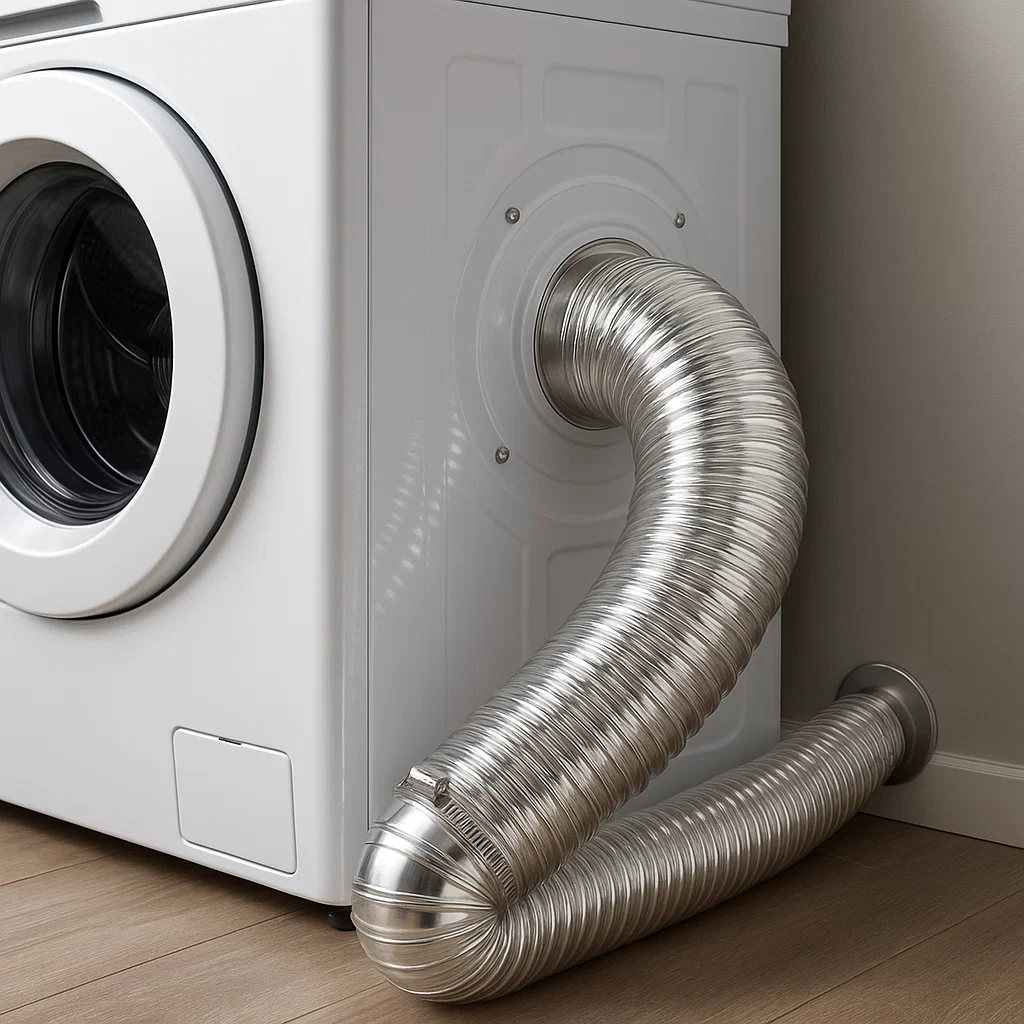
- Make sure the transition duct is not crushed behind the machine.
- Check that the exterior damper opens freely.
- Record a baseline dry time after cleaning so you can spot changes early.
FAQs
Are roof dryer vents always bad?
Not inherently. Roof vents can perform well if the route is within limits and the damper moves freely. They simply require more frequent checks and often a shorter cleaning interval.
Will dryer vent cleaning void my warranty?
No. Dryer vent cleaning is normal maintenance recommended by manufacturers. It helps keep temperatures and run times within design limits.
How airflow and run design set your schedule
Airflow is affected by the length and design of the dryer vent route. The blower inside the dryer is built to work against a certain amount of resistance. Add a long vertical rise, multiple tight elbows, or an outlet that does not open fully, and airflow drops.
When airflow drops, lint that would normally ride the airstream outdoors can settle inside the duct. That is why two homes with the same dryer may need very different cleaning schedules.
Scenarios and recommended intervals
- Average household, short wall vent: every 12 months
- Large family or frequent laundry: every 6 to 12 months
- Homes with shedding pets: about every 6 months
- Long run with multiple elbows: every 6 months or as recommended after inspection
- Roof termination: often every 6 months, depending on airflow and lint buildup
- Any home with slow dry times: schedule service as soon as the issue appears
Energy and time savings when you clean on time
In homes with overdue vents, mixed loads may drop by 10 to 30 minutes after service. That can save hours over the course of a year in busy households. Better airflow also helps the dryer cycle more normally, reduces unnecessary heat exposure to fabrics, and helps the appliance work less aggressively.
Baseline timing test
After a professional cleaning, dry a standard mixed load and record the time. That becomes your baseline. If you later notice the same load taking 15 to 20 minutes longer, do quick checks first: clean the lint screen, make sure the transition is not crushed, and confirm the exterior damper moves freely. If the longer dry time continues, move your cleaning up rather than waiting for a total blockage.
What to expect on appointment day
- The technician inspects the dryer area and vent path where accessible.
- The dryer may be moved carefully if needed and safe to do so.
- Lint and debris are removed from the vent system.
- Airflow is checked at the exterior termination.
- Any visible issues, such as crushed ducts or blocked hoods, are explained clearly.
- You receive practical recommendations for your cleaning interval.
Common myths, answered
Myth: Cleaning the lint screen is enough
The lint screen helps, but it does not catch everything. Lint still moves into the duct and can build up over time.
Myth: Dryer vents only need cleaning when they stop working
Waiting for a major blockage can increase heat, extend dry times, and create unnecessary risk. Preventive cleaning is the better approach.
Myth: New dryers do not need vent cleaning
A new dryer still uses the same vent route. If the duct is long, restricted, or already dirty, the new appliance can still struggle.
Quick recap
Most homes should clean dryer vents annually. Homes with heavy laundry use, pets, long duct runs, roof terminations, or slow dry times may need cleaning every six months. If dry times increase, the exterior damper barely opens, or the laundry room feels unusually hot, it is time to schedule dryer vent service.

