
Hardwood is durable, but the finish on top is what you walk on every day. Grit acts like sandpaper, tiny spills can leave dull rings, and residue from the wrong cleaner can build into a haze. A traffic-based cleaning schedule helps protect the finish and keeps floors easier to maintain.
Quick answer
Most homes benefit from professional hardwood floor cleaning about once a year. Busy households with kids, pets, shoes indoors, frequent cooking, or heavy entryway traffic may need professional cleaning every 6 to 9 months in key areas like kitchens, halls, and mudrooms.
Low-traffic rooms, guest rooms, and formal dining areas may stay on a longer schedule, especially when the home has good matting, regular vacuuming, and the right neutral cleaner.
Why traffic-based scheduling works
Square footage alone does not tell the full story. A small kitchen used daily can collect more soil, grease, and residue than a large dining room used only a few times a year. Instead of using one schedule for the whole house, look at how each space is used.
- How many people live in the home?
- Do you have pets?
- Are shoes worn indoors?
- How often do you cook?
- Is there a direct entry from outside?
- Do certain traffic lanes look dull faster than the rest of the floor?


Signs you are due for a professional reset
- The floor looks dull even after routine cleaning.
- Traffic lanes appear darker or cloudy.
- The surface feels sticky or tacky.
- Cleaner residue leaves streaks or haze.
- Kitchen areas near the stove look greasy or uneven.
- Entryways show salt, grit, or winter residue.
- Weekly cleaning is taking longer but the floor still does not look right.
What Angelo’s does during a professional clean
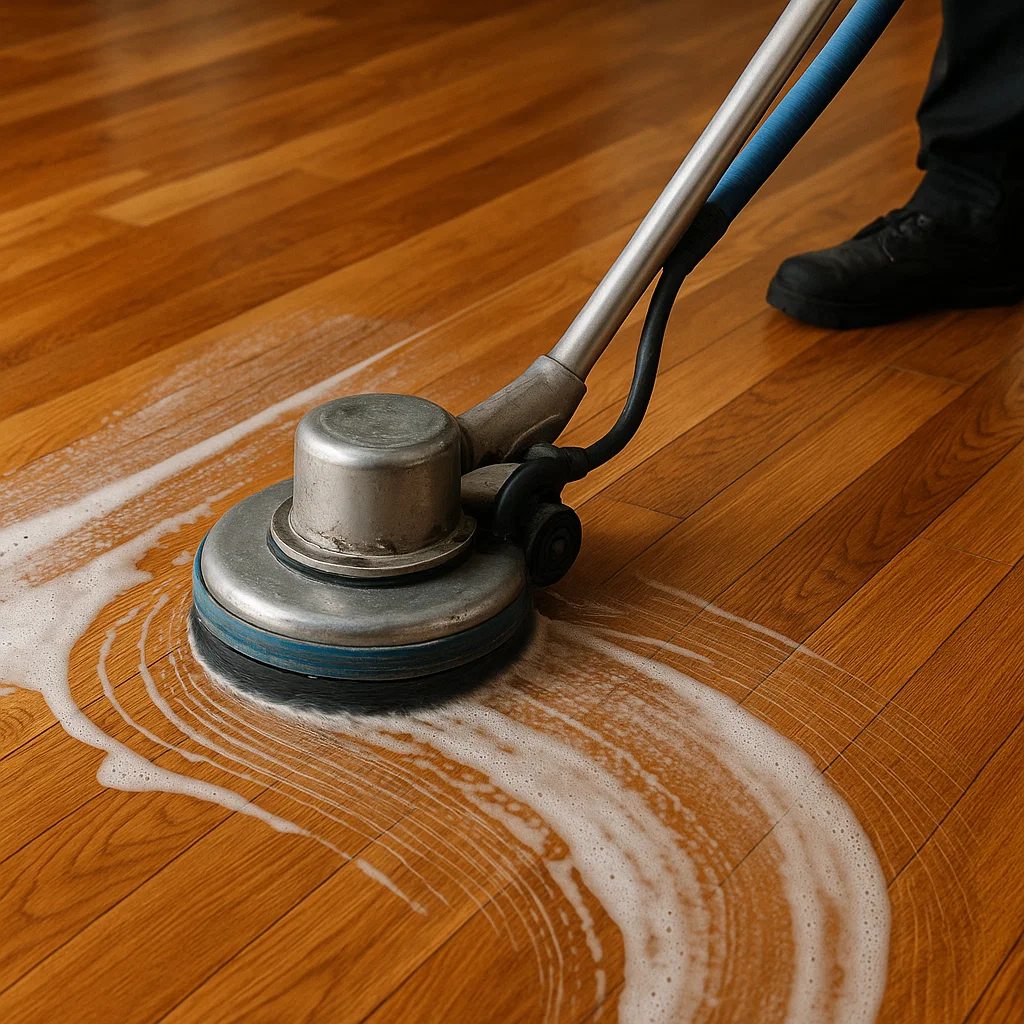
Angelo’s Cleaning uses low-moisture equipment and finish-safe cleaning solutions to lift soils without flooding the wood. The process targets residue, micro-grit, traffic film, and dull buildup sitting on top of the finish.
- Walk-through and finish assessment
- Dry soil removal before cleaning
- Low-moisture professional cleaning
- Detailing of edges, corners, and high-use areas
- Recovery of cleaning solution and loosened soil
- After-care recommendations based on your home’s traffic
Between-visit habits that matter most
- Use entry mats outside and inside main doors.
- Vacuum or dust mop regularly with a hardwood-safe attachment.
- Use a neutral cleaner made for hardwood finishes.
- Avoid steam, vinegar, oil soap, and wax unless approved for your finish.
- Wipe spills quickly.
- Use felt pads under furniture and replace them when they collect grit.
How traffic level changes your schedule
Kids and pets
Snack time, craft time, wet paws, and pet hair add up. Kitchens, hallways, and mudrooms may need professional cleaning twice a year, while bedrooms and studies can often stay on an annual schedule.
Frequent cooking
Cooking oils can settle on nearby hardwood, especially around the stove and kitchen traffic lanes. A 6- to 9-month cadence can help keep the finish cleaner and easier to maintain.
Shoes-off homes
A shoes-off routine stretches the interval because less grit is ground into the finish. With clean doormats and weekly vacuuming, many shoes-off homes do well with annual professional cleaning.
Do you ever need sanding?
Sanding is for wood damage: deep scratches through the color, dark pet stains, heavy UV bleaching, cupping from moisture events, or when you want to change the floor color. If the issue is haze, sticky feel, dull traffic paths, or cleaner buildup, professional cleaning is usually the more affordable and less disruptive first step.
FAQs
How long does professional hardwood floor cleaning take?
Most kitchen-and-hall projects are completed in a few hours. Rooms can usually return to light foot traffic shortly after cleaning, while area rugs should typically wait until the next day.
Will cleaning change the floor color?
Cleaning removes soils and residue; it does not change stain color. The floor’s intended sheen may return once residue is removed.
Is moisture safe for hardwood?
Yes, when it is controlled. Professional low-moisture tools keep solution on the finish surface and recover it quickly. The wood is not flooded or saturated.
How do I protect floors between professional visits?
Catch grit with mats, vacuum bare floors regularly, use a neutral cleaner, and avoid steam and vinegar. These habits protect the finish and extend the time between professional cleanings.
Sample 12-month plan you can copy
January to March: Watch salt and grit. Vacuum more often while roads are treated. Consider a mid-winter touch-up for entries and kitchens if traffic is heavy.
April to June: Schedule annual or semiannual professional cleaning. Spring is a great time to remove winter film and start fresh.
July to September: Monitor humidity and clean high-use zones with a neutral product and microfiber pad.
October to December: Consider a pre-holiday clean for photos, guests, and easier post-party cleanup. Replace felt pads and wash rugs before gatherings.
Common mistakes that shorten finish life
- Using too much water
- Using steam mops
- Cleaning with vinegar or harsh products
- Letting grit sit in traffic lanes
- Dragging furniture without pads
- Using oil-based polishes that create buildup
- Skipping mats at exterior doors
Case study: two households, two schedules
Busy family in West Chester
Four people, a Labrador, and a kitchen used daily. The kitchen and mudroom benefit from professional cleaning every six months, with a whole-first-floor visit once a year.
Empty-nest couple in Phoenixville
Shoes come off at the door, cooking happens a few nights a week, and travel is frequent. Annual cleaning is usually enough, with an optional refresh before hosting Thanksgiving.
Quick recap
Most hardwood floors should be professionally cleaned about once a year. Busy kitchens, halls, pet areas, and entryways may need service every 6 to 9 months. A traffic-based schedule keeps the finish cleaner, reduces haze and grit buildup, and makes weekly maintenance easier.


