
Small carpet problems do not always require replacing the whole room. Pet scratches, small burns, bleach spots, pulled loops, and split seams are often localized issues that can be repaired with the right patching, re-bonding, and stretching methods.
Repairs that restore the room
Kids, pets, furniture, spills, and everyday life can be hard on carpet. The good news is that many carpet problems are limited to one area and can be repaired without replacing the entire room. The goal for every repair is strength, stability, and a blend that looks natural from standing height.
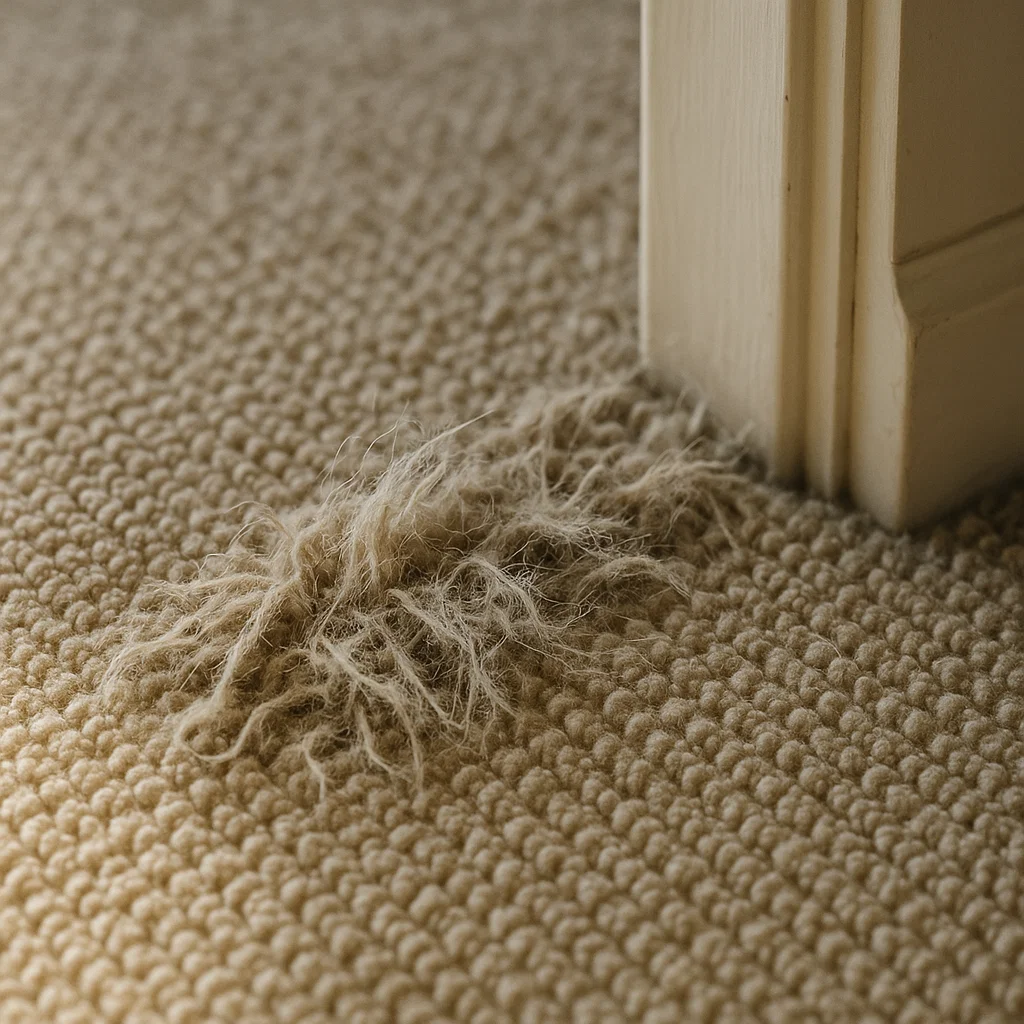
Common carpet repairs include pet damage at doorways, small burns, iron marks, pulled Berber loops, bleach spots, and seams that have started to split or smile.
Patch repairs done right
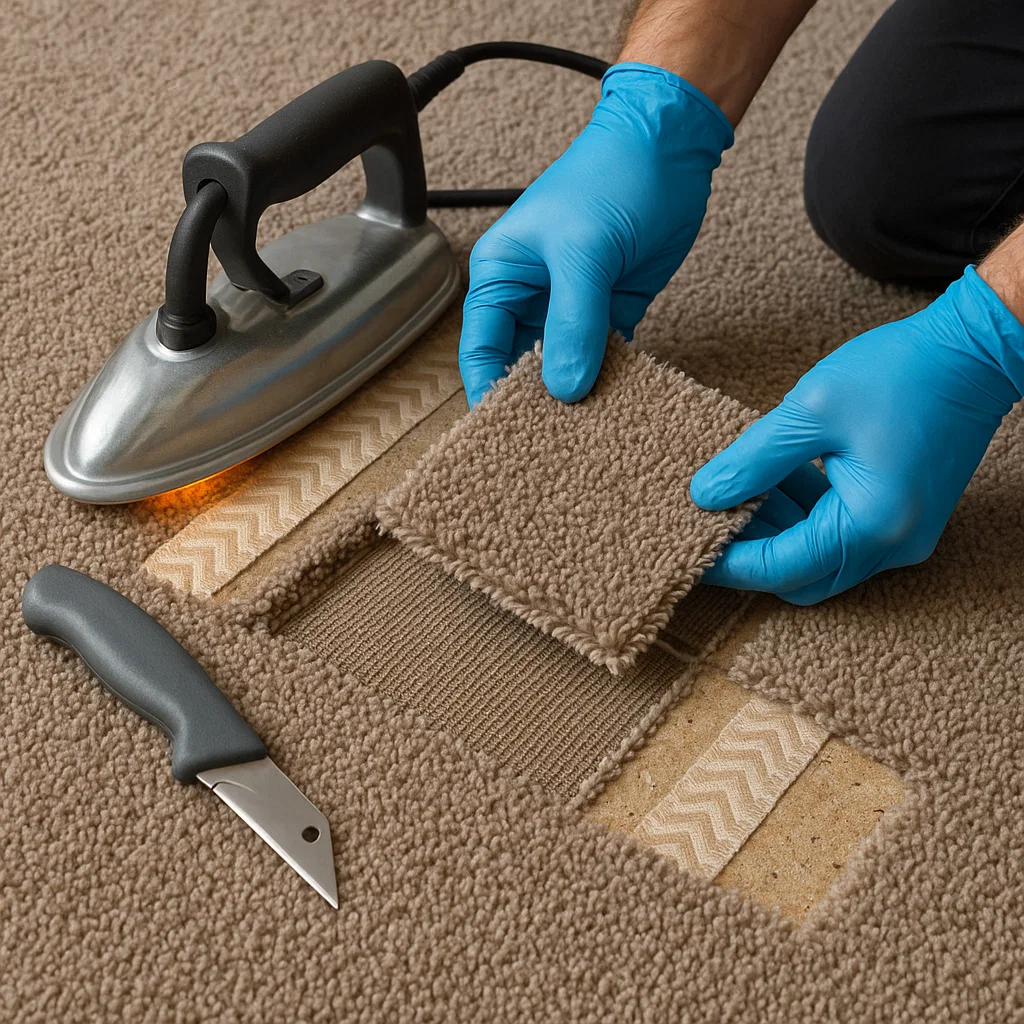
For small holes, bleach spots, or burns, a technician can cut a clean section and install a donor piece from a remnant or a hidden area such as a closet. The donor piece is bonded with seam tape beneath the pile, aligned to the nap direction, and groomed so the perimeter blends as naturally as possible.
Seam failures
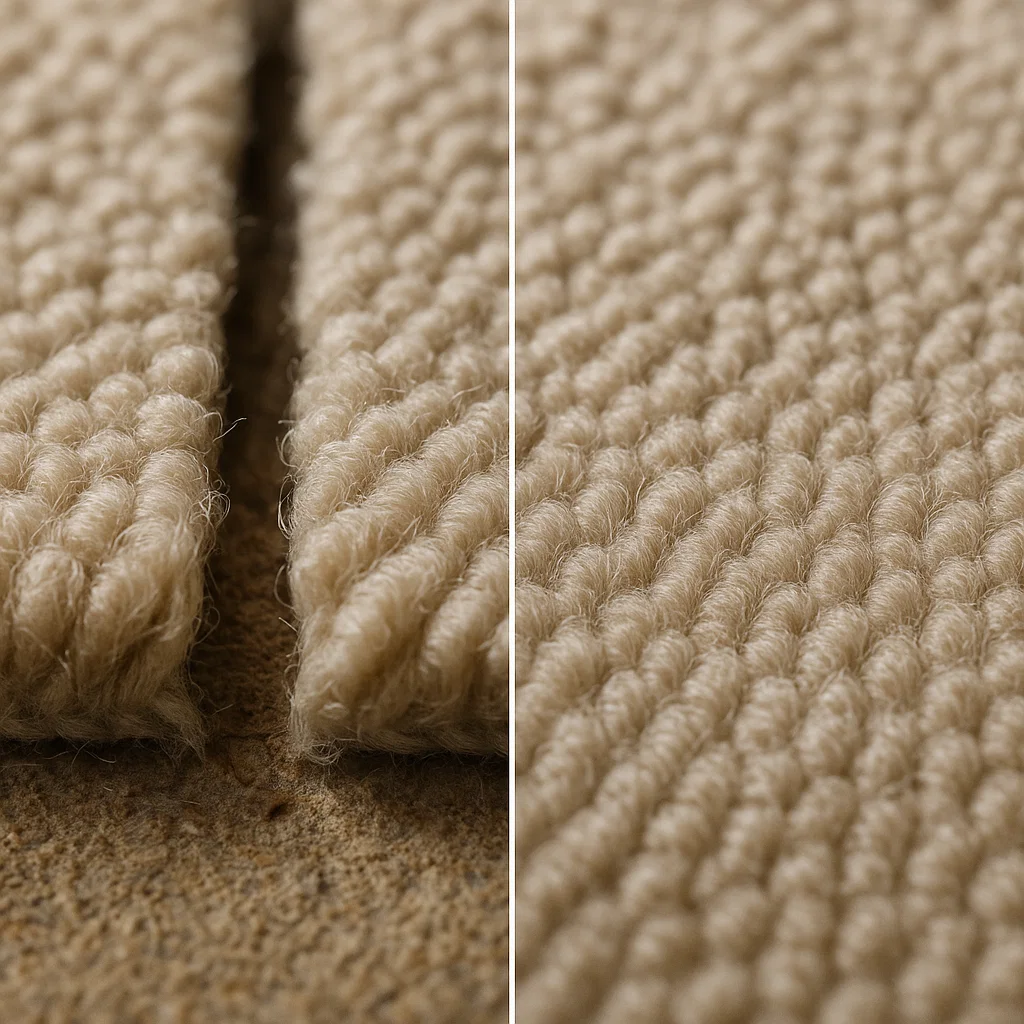
Seams can open when old seam tape loses bond, heavy traffic crosses a poorly aligned join, or carpet shifts because it was not properly stretched. The repair usually involves removing failed adhesive, applying new seam tape, and re-bonding the edges while protecting the carpet fibers.
When movement contributed to the seam failure, a re-stretch across the seam can help prevent the problem from coming back.
Pet damage at thresholds
Pets often dig at closed doors, pulling tufts or damaging carpet near thresholds. If fibers are only lifted, a re-stretch and re-tuck may close the gap. If tufts are missing, a small patch may be needed to rebuild the damaged area and blend it into the doorway.
After repair, it can also help to use door sweeps, training aids, or other prevention steps so curious paws do not return to the same spot.
When repairs are not appropriate
Repairs are most effective when damage is localized and the surrounding carpet is still in usable condition. Replacement may be the better option if the carpet has widespread wear, backing failure, large permanent stains, extensive pet odor contamination, or major color mismatch that cannot be blended.
Bleach spots vs. stains
Bleach removes dye from carpet fibers, while stains add unwanted color or residue. Cleaning can help many stains, but it cannot restore dye that has been removed. For bleach spots, the best solution may be a matching patch or, in select cases, a small dye repair.
The goal is realistic improvement: from standing height, your eye should no longer be drawn immediately to the damaged area.
How we blend patches
- Match the donor piece as closely as possible.
- Align the nap direction so light reflects consistently.
- Cut clean edges that follow the carpet backing grid.
- Bond the repair securely beneath the pile.
- Groom the fibers so the perimeter softens visually.
What we need from you
- Let us know what caused the damage, if known.
- Save any carpet remnants from the original installation.
- Clear small items from the repair area.
- Point out pet odor, moisture, or repeated damage concerns.
- Tell us if a closet donor piece is acceptable if no remnant is available.
Timeline
Most single carpet repairs take about 45 to 90 minutes. Multiple patches, seam re-bonds, or repairs combined with stretching may take longer, especially when the area needs to be stabilized so the fix holds.
Repairs we combine with stretching
Movement can stress seams, doorways, and carpet edges. If a threshold has lifted or a seam is beginning to smile, stretching first and then stabilizing the repair can create a stronger result. Combining services can also save a visit and keep the room looking more consistent.
After-care for repaired areas
- Avoid dragging furniture over a new seam or patch.
- Vacuum normally after the repair has settled.
- Keep pets away from the area while the repair cures.
- Address moisture or odor issues quickly.
- Expect patch edges to soften visually with normal traffic and vacuuming.
Why choose Angelo’s for carpet repairs?
Angelo’s Cleaning handles carpet repair, stretching, cleaning, and related floor care throughout Southeastern Pennsylvania. Our repair approach focuses on practical solutions, clear expectations, and durable results that help extend the life of your carpet whenever repair makes sense.
Repair menu at a glance
- Pet scratch and doorway damage repair
- Small burn and iron mark patches
- Bleach spot patching or dye repair where appropriate
- Split seam re-bonding
- Berber loop repair
- Threshold re-tuck and edge stabilization
- Stretching combined with seam or edge repairs
Setting expectations
Every repair aims to look natural from standing height under typical lighting. Up close, you may still notice where fibers meet, especially at first. Over a few weeks of normal traffic and vacuuming, the edges often soften visually as the pile blends.
FAQ
Will a carpet patch be invisible?
At kneeling distance, you may notice the perimeter at first. From standing height, a well-matched patch should blend well, especially after a few weeks of normal wear.
What if I do not have extra carpet?
A donor piece can often be taken from the back corner of a closet and that closet area can be replaced with a close match. The best option depends on your carpet and room layout.
Can Berber loops be repaired?
Yes. A pulled loop can often be secured, trimmed, or patched in a small section so the loop pattern is preserved as closely as possible.
How lighting and pile direction affect the look
Carpet is a directional surface. Sunlight from a window can make one side of a patch look slightly lighter until the pile settles. That is not always a color mismatch; it can be the way fibers reflect light. Correct nap direction and grooming help the repair blend more naturally.
Guarantees and durability
Quality repairs are built to last. Heat-bonded seams cure under pressure, and bonded inserts are sized so load spreads evenly. If an area loosens under normal use, it should be assessed so the cause can be corrected within the scope of the repair.
Quick recap
Pet damage, burns, bleach spots, and split seams are often repairable when the damage is localized and the surrounding carpet is still in good condition. A professional repair can patch, re-bond, re-tuck, and re-stretch as needed to restore strength and help the room look cleaner and more complete.


