
Loop-pile and patterned carpets are beautiful, durable, and particular. Stretching these carpet styles requires a careful approach that restores proper tension while protecting loops, seams, and pattern alignment.
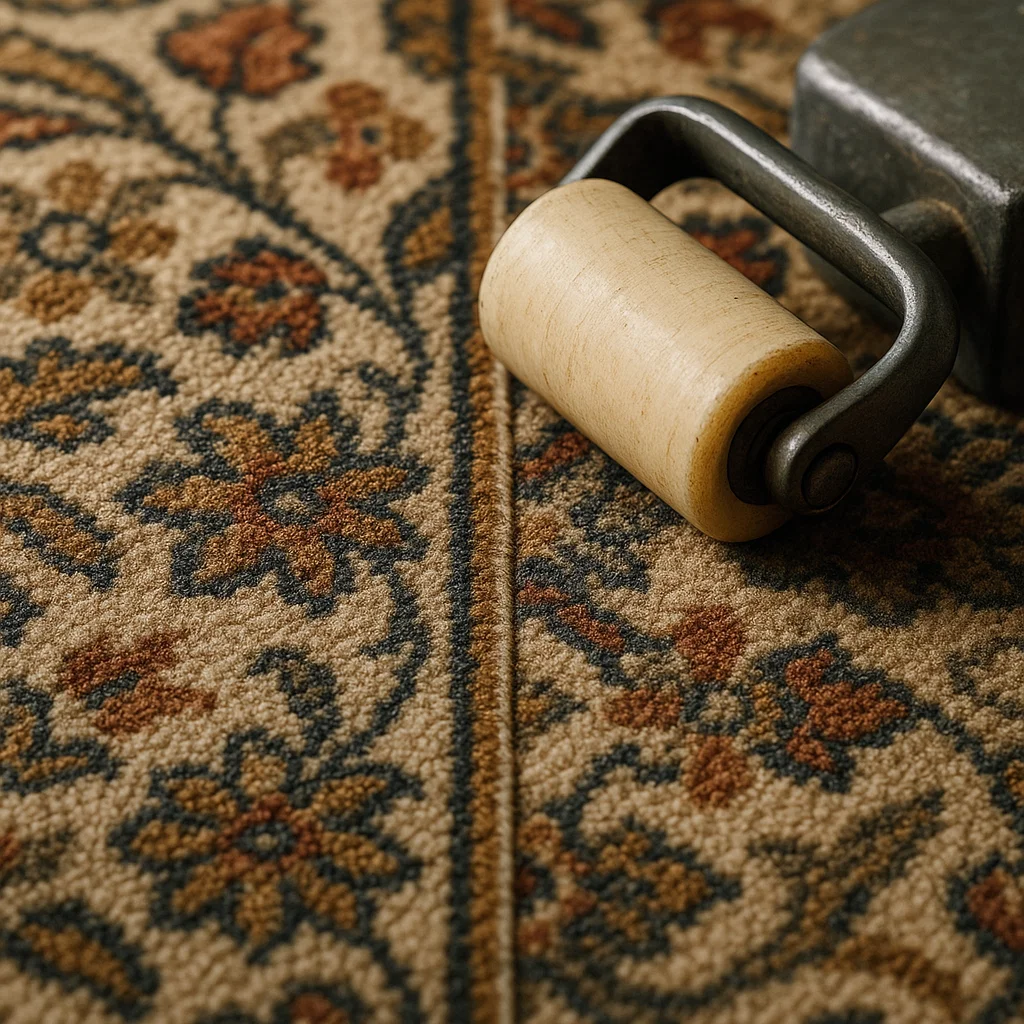
Berber loops need gentle, even tension
Berber is a loop-pile carpet construction. Instead of cut yarn ends, individual loops are anchored into the backing. That looped construction helps make Berber durable and stylish, but it also means a snag can travel if the carpet is handled roughly.
When stretching Berber carpet, the goal is to apply controlled, even tension without pinching or damaging the loops. A power stretcher does the main work, while a knee kicker is used only for careful positioning in corners, along edges, or on stairs.
Why patterned carpet is different
Patterned or sculpted carpet has a visual repeat that needs to stay aligned. If the original installation did not carefully match the pattern, or if the carpet relaxed over time, the pattern can appear to drift or make a wall look crooked.
During stretching, patterned carpet should be aligned to a reference wall or sight line. Smaller, controlled pulls help keep the motif true. Seams are opened and re-bonded only when necessary to preserve the pattern.
Our method for special cases
- Inspect carpet construction, backing, seams, and transitions.
- Identify the main sight lines in the room.
- Use controlled tension to reduce stress on loops and seams.
- Make smaller pulls where pattern alignment matters most.
- Re-tuck, trim, and finish edges carefully for a clean result.
Repair considerations for loops and patterns
Looped and patterned carpets require extra care during repairs. A patch must match not only the color but also the texture, direction, and repeat of the carpet. A closet donor piece is often the best option for patterned repairs because it gives the closest available match.
If a perfect match is not available, a technician may recommend a discreet threshold repair, a seam adjustment, or another design-aware approach that keeps the repair as subtle as possible.
What success looks like
In a Berber room, successful stretching should leave the carpet feeling smoother underfoot with tight, even rows and no visible smiles across seams. In a patterned room, the motif should run straight along baseboards, doorways, and thresholds. These details may be subtle, but they make the room feel finished and intentional.
Pattern alignment in L-shaped rooms and hallways
Patterns can drift in long runs, hallways, and L-shaped rooms if the original layout did not respect the repeat. A control line helps guide the work. In hallways, alignment should prioritize the longest sight line so the pattern reads straight where the eye travels most.
What cannot be corrected by stretching
- Severe manufacturing bow or skew across a long patterned run
- Permanent stains or discoloration
- Missing loops or badly damaged yarn
- Backing that is brittle, delaminated, or crumbling
- Old repairs that do not match the pattern or texture
Care tips after service
- Avoid dragging heavy furniture across newly adjusted seams.
- Vacuum with the correct setting for loop-pile carpet.
- Address snags quickly before they travel.
- Use furniture pads to reduce stress in high-use areas.
- Schedule cleaning after stretching if both services are needed.
Stairs and landings
Berber carpet on stairs requires careful bite and smaller pulls to prevent damage or telegraphing. Treads and risers should be tightened methodically and secured at the stringers so edges stay crisp. Landings with pattern repeats should be aligned to the sight line at the top step for the cleanest look.
Expectations and limitations
If the original installation introduced a slight pattern skew, stretching can often minimize the visual effect but may not eliminate it entirely across very long runs. A good technician will show the alignment choices and prioritize what your eye sees first when you enter the room.
Two quick case studies
Berber room with ripples near the center
A room with loose Berber carpet can often be improved with controlled power stretching, careful edge work, and minimal use of a knee kicker. The goal is to remove ripples without stressing the loops.
Patterned hallway with visual drift
In a hallway, the best result may come from aligning the pattern to the longest visible run. That makes the area look straighter and more intentional, even if small limitations remain from the original installation.
Tools we use for special cases
- Power stretcher for controlled room-wide tension
- Knee kicker for positioning, not heavy stretching
- Seam tools when re-bonding is needed
- Trimmers and tuck tools for clean perimeter finishing
- Alignment marks and sight-line checks for patterned carpet
FAQ
Can Berber carpet be stretched safely?
Often, yes. Berber can be tightened with careful, controlled pulls and proper re-tacking. If loops are damaged, small areas may need to be secured or patched.
Will stretching distort a patterned carpet?
It should not when done carefully. Incremental pulls and alignment marks help keep the pattern square. If a seam must be adjusted, it should be realigned to the repeat.
What is best for patterned carpet repairs?
A closet donor piece is often best for patterned repairs. If that is not possible, a technician can recommend a discrete threshold patch or another design-aware alternative.
Reading the room like a designer
Patterns and loop textures influence how a room feels. The best stretching approach prioritizes straight lines along the wall or view you notice first, such as the wall opposite the entry or the area framing windows. Aligning to that sight line helps the room read as intentional, even in older installations with minor skew.
Post-service check
- Walk the room and check that ripples are gone.
- Look along baseboards and thresholds for clean alignment.
- Review any seams that were adjusted or re-bonded.
- Confirm furniture placement will not drag across fresh seam work.
- Ask about cleaning recommendations for loop-pile or patterned carpet.
Seam curing and room use
If a seam is re-bonded while aligning a pattern, it should be allowed to cool under weight before grooming. You can usually walk the room right away, but avoid dragging furniture straight across the adjusted seam for the rest of the day so the bond can cure flat.
Quick recap
Berber and patterned carpets can often be stretched successfully, but they require careful technique. Gentle, even tension protects loop-pile carpet, while sight-line alignment and smaller pulls help patterned carpet stay straight. If damage, severe skew, or backing failure is present, a repair or replacement discussion may be the smarter next step.


