
Upholstery Cleaning • Furniture Care Guide
Complete upholstery cleaning guide for longer-lasting furniture
Upholstered furniture is one of the biggest everyday-use investments in a home, yet it is also one of the easiest to accidentally damage with the wrong spot cleaner, too much water, or aggressive scrubbing.
Whether you are in King of Prussia, Blue Bell, Royersford, Phoenixville, West Chester, Conshohocken, Pottstown, or nearby Southeastern Pennsylvania communities, this guide will help you understand fabric types, avoid common cleaning mistakes, and see why professional upholstery cleaning can keep furniture looking newer for longer.
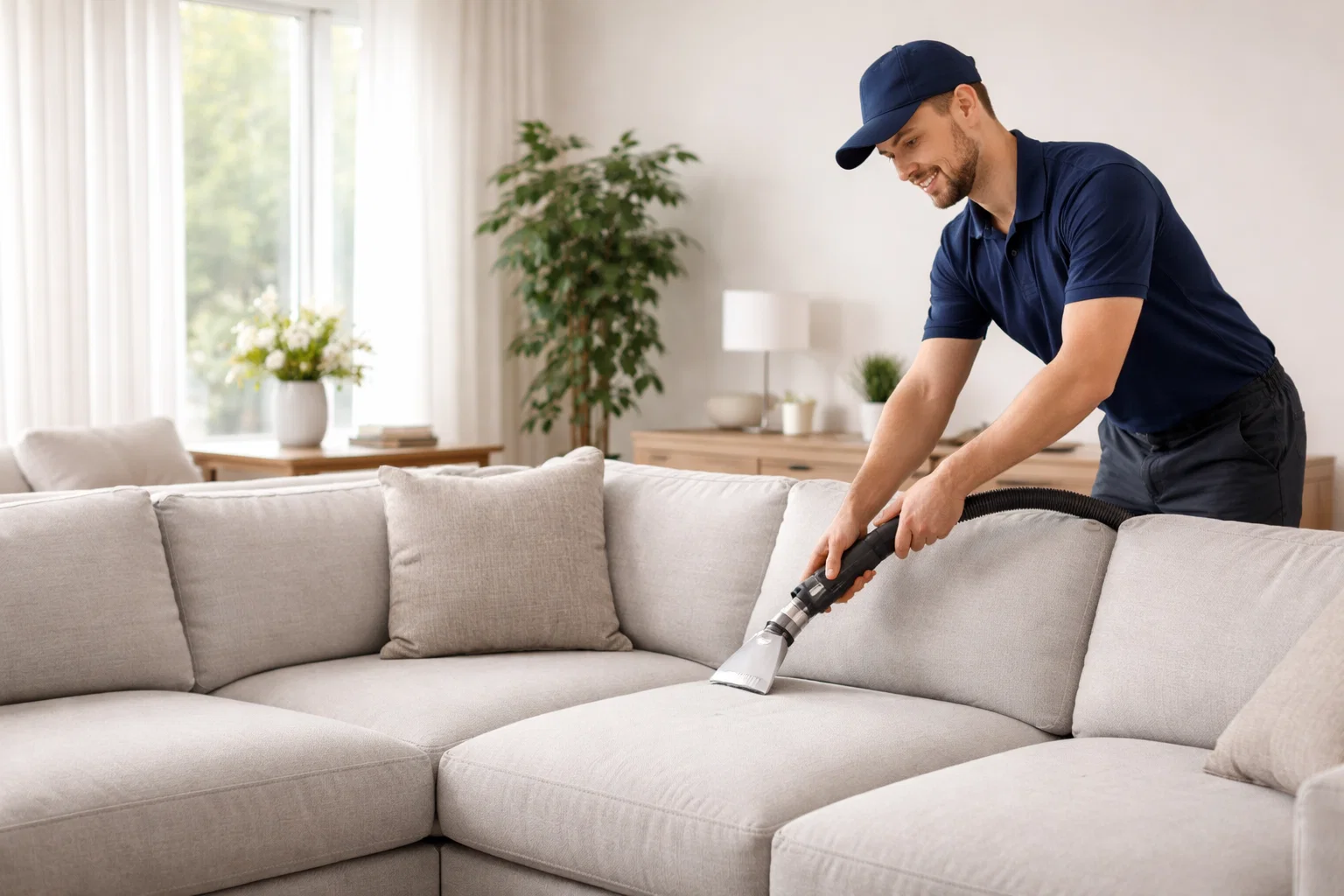
Fast answer: to prolong the life of upholstered furniture, vacuum weekly, blot spills immediately, avoid over-wetting, follow the fabric cleaning code, rotate cushions when possible, and schedule professional upholstery cleaning every 12 to 24 months, or every 6 to 12 months for homes with pets, kids, allergies, or heavy use.
Need upholstery service? Angelo’s Carpet Cleaning provides professional upholstery cleaning for sofas, sectionals, chairs, ottomans, and other fabric furniture throughout Southeastern Pennsylvania.
Why upholstery gets dingy even when you do not spill
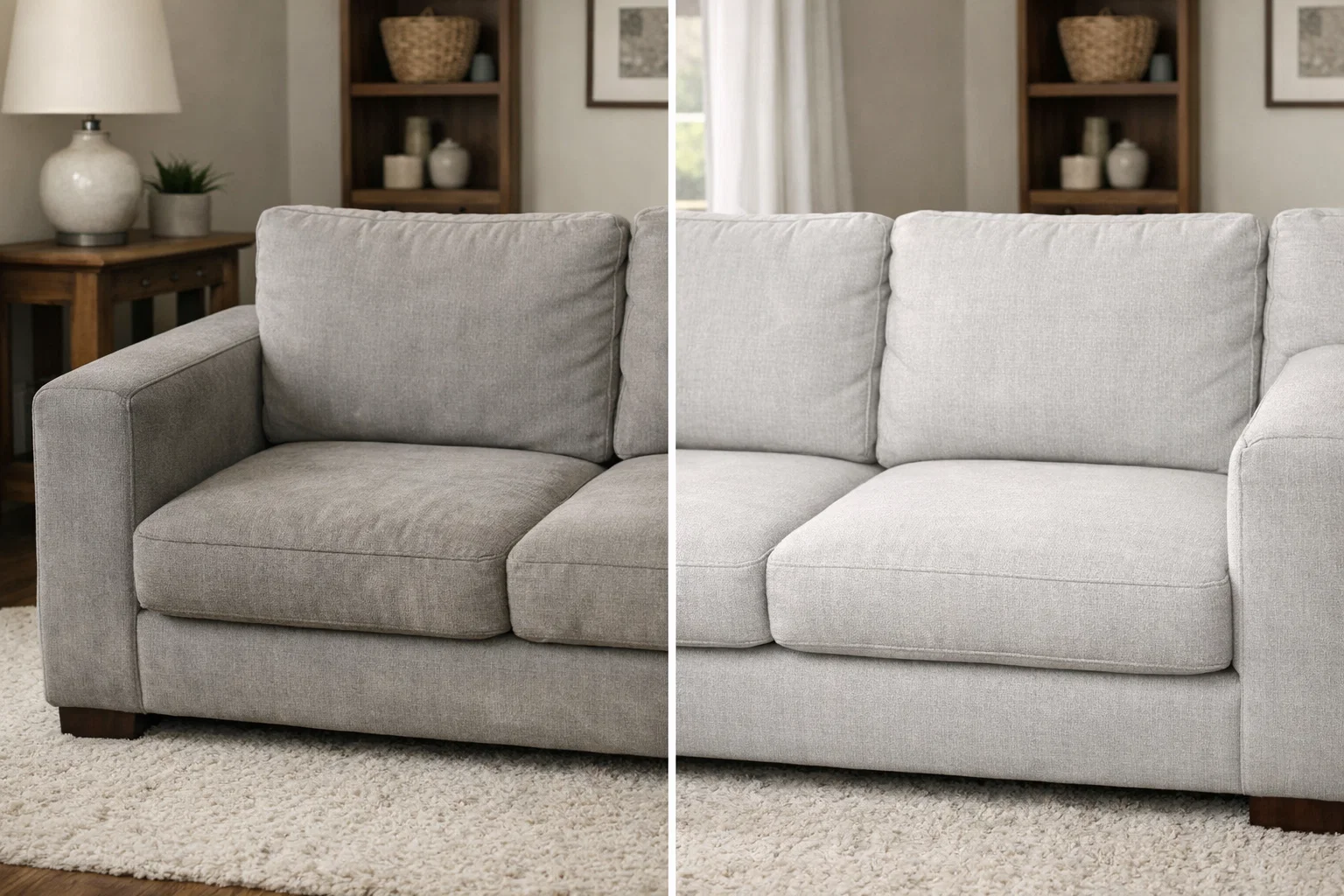
Most furniture does not look tired because of one big accident. It fades slowly from body oils, dry soil, pet hair, dust, and daily contact. Armrests darken first. Headrests and seat fronts collect oils. Cushions trap crumbs and grit that can act like sandpaper on fibers over time.
In high-use living rooms and family rooms, those oils and fine particles build up gradually. Then one day the couch looks gray, flat, or worn even if you have been careful.
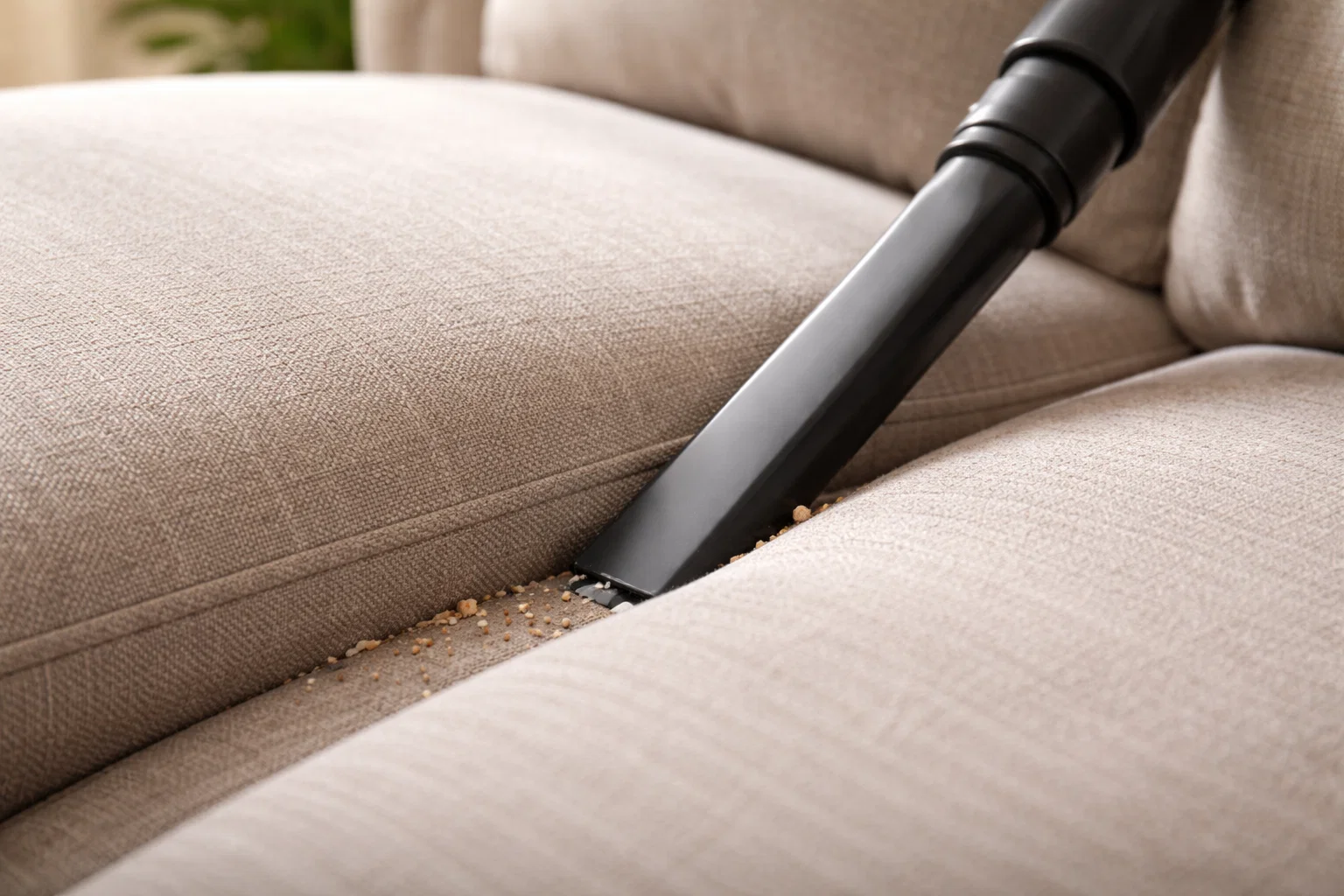
What wear looks like on upholstery
- Darker armrests and headrests
- Flattened or matted fabric texture
- Gray traffic areas on cushion fronts
- Recurring spots after DIY cleaning
- Pet hair, dust, and crumbs trapped between cushions
Fabric types and cleaning codes
Before you scrub anything, take a moment to identify your upholstery. Many pieces have a manufacturer tag with a cleaning code, usually under a cushion or on the bottom of the frame. If you are not sure, pause and ask a professional before using water or a spot cleaner.
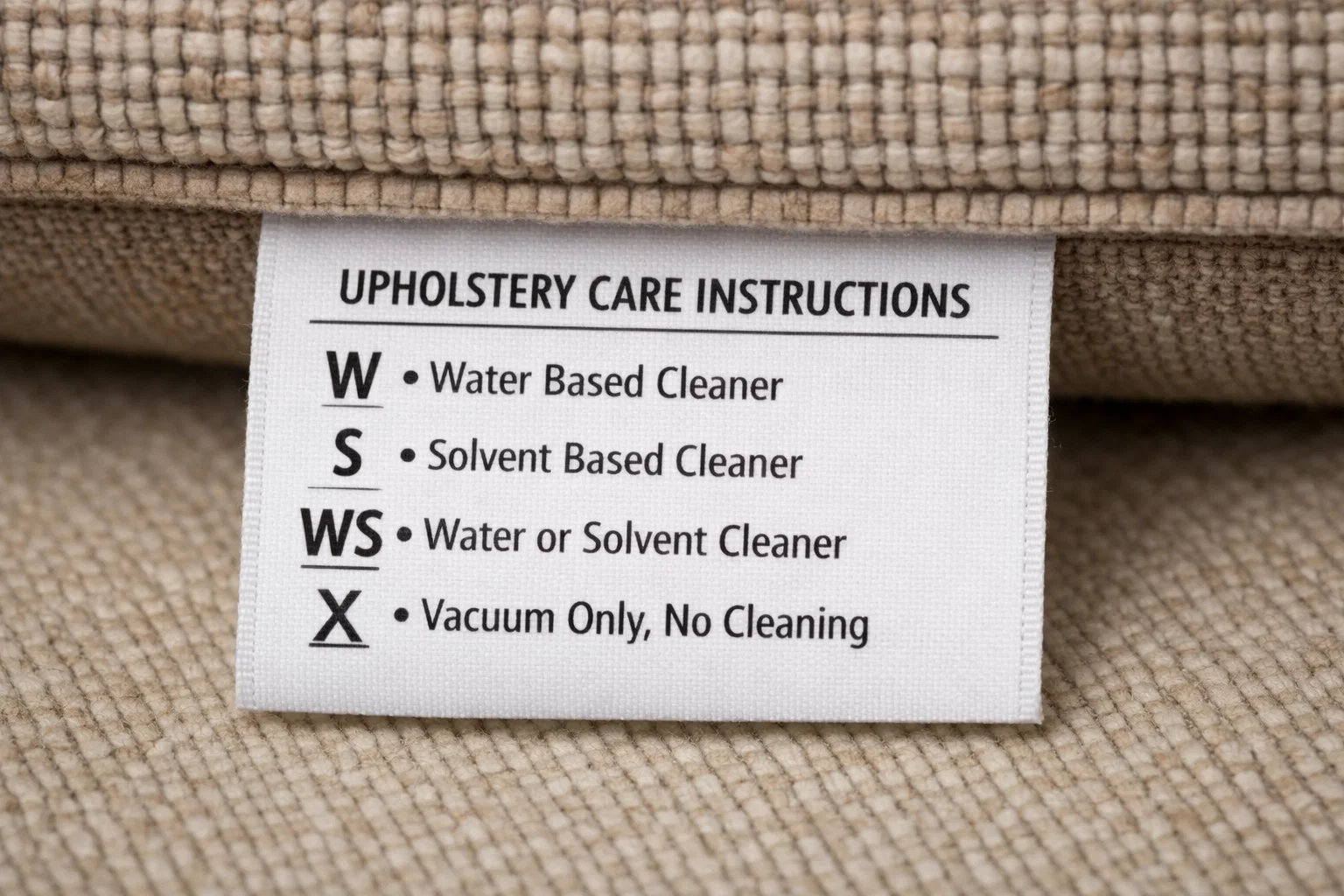
| Cleaning code | What it usually means | Homeowner guidance |
|---|---|---|
| W | Water-based cleaning may be allowed. | Use very limited moisture, test first, and avoid soaking the fabric. |
| WS | Water-based or solvent-based methods may be allowed. | Pre-testing is still important because dyes, backing, and texture can react differently. |
| S | Solvent-based or specialty cleaning is typically recommended. | Avoid water-based DIY cleaners unless a professional confirms they are safe. |
| X | Vacuum-only care is usually recommended. | Do not wet clean. Vacuum gently and request a professional evaluation. |
Code W or WS
These fabrics may allow water-based cleaning, but that does not mean they can be soaked. Controlled moisture, proper rinsing, and strong extraction still matter.
Code S or X
These codes require more caution. Code S fabrics typically call for solvent-based or specialty methods, while Code X fabrics should not be wet cleaned and are usually limited to vacuuming and professional evaluation.
Common upholstery fabrics
Microfiber, polyester, cotton blends, linen blends, rayon, velvet, leather, suede, and specialty fabrics all behave differently. Fiber content, dye stability, texture, and backing affect the safest cleaning method.
Important: if your furniture is leather, suede, velvet, or another specialty fabric, mention it when scheduling so the correct method and tools can be planned for your piece.
At-home maintenance that actually helps
The goal of at-home care is not to deep clean upholstery. It is to slow down buildup so professional cleaning is easier, safer, and more effective.
Weekly: 5 to 10 minutes
- Vacuum cushions, arms, and crevices with an upholstery tool.
- Remove pet hair before it becomes embedded.
- Fluff and rotate loose cushions when possible.
Monthly: quick refresh
- Check under cushions for crumbs and grit.
- Look for new spots while they are still easier to address.
- Move throws and pillows so fabric wears evenly.
Seasonal: prevention mode
- Evaluate high-use seating for oils and dull areas.
- Schedule professional cleaning before heavy buildup becomes permanent-looking.
- Ask about fabric protection for busy households with kids, pets, or frequent guests.
Spot-cleaning myths that ruin furniture
Many DIY methods appear to work because they change the appearance temporarily. Later, residue, spread staining, or texture damage can make the area look worse.
Myth 1: Dish soap is gentle, so it is safe for upholstery
Dish soap can be difficult to rinse fully from upholstery. Left behind, it becomes a soil magnet. The spot may look clean for a week, then reappear darker as it attracts oils and dust.
Myth 2: More water means better cleaning
Over-wetting can push contamination deeper, slow drying, and create water rings, especially on natural fibers. Upholstery cleaning depends on controlled moisture and effective extraction or rinsing.
Myth 3: Scrub hard to lift the stain out
Aggressive scrubbing can fray fibers, distort texture, and spread staining. Blotting is safer than scrubbing in most cases.
Myth 4: Vinegar or baking soda fixes everything
DIY products can create residue or change fabric feel. More importantly, they often do not remove the full spill load, especially oils, so the problem returns.
Rule of thumb: if a stain is bigger than your palm, has odor, or keeps returning after you clean it, it is usually time for professional help, especially on light-colored furniture.
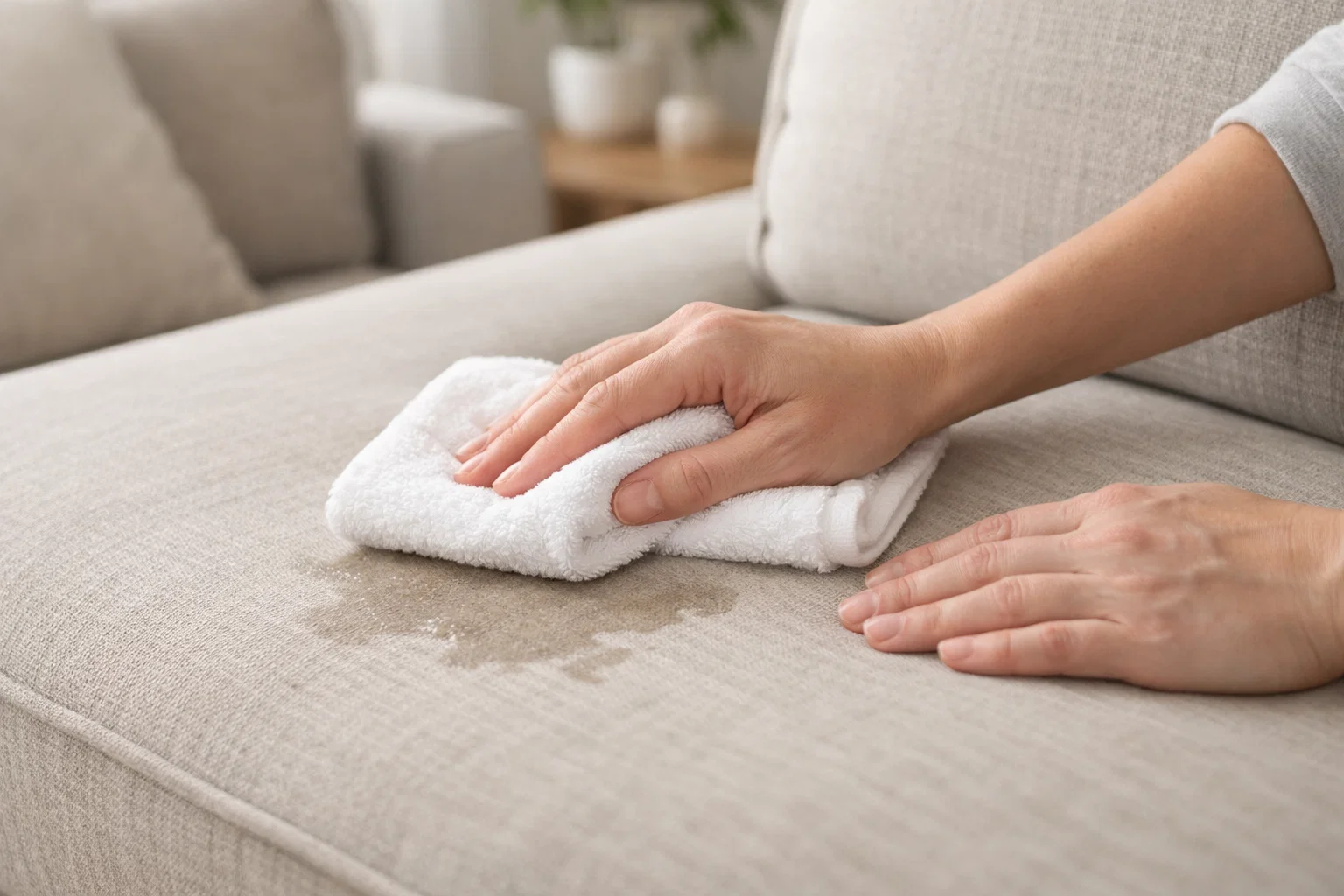
What to do right after a spill
- Blot gently with a clean white towel.
- Do not scrub or grind the spill into the fabric.
- Avoid using large amounts of water.
- Check the cleaning code before applying any cleaner.
- Call a professional if the spot spreads, transfers dye, smells, or keeps returning.
Stop and call a pro if you notice dye transfer on your towel, the spot spreads, the fabric feels rough afterward, or the furniture has a Code S or X tag.
Professional upholstery cleaning and hot-water extraction
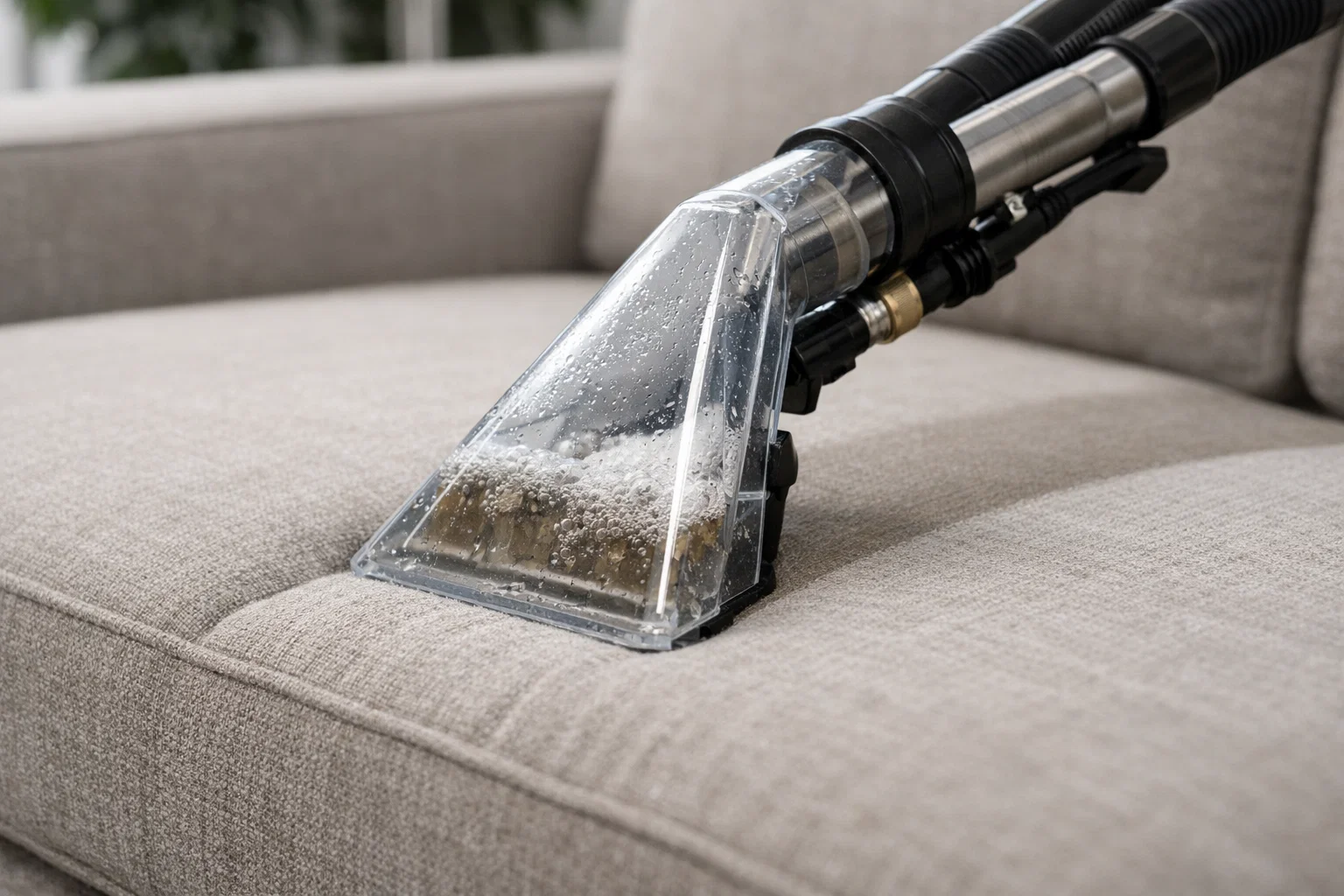
Hot-water extraction, often called steam cleaning, is a professional method that applies controlled heat and cleaning solution, then extracts it back out with suspended soil. The key is not just washing. It is the rinse and removal.
When used on the right fabric, hot-water extraction can lift body oils, embedded soil, and spill residue that vacuuming cannot reach. A quality upholstery cleaning appointment typically includes fabric identification, pre-testing, targeted pre-treatment, controlled cleaning, and careful finishing so the piece dries evenly and looks uniform.
What professional cleaning can help with
- Body oils on arms, headrests, and cushions
- Dry soil and embedded grit
- Food and drink residue
- Pet hair, dander, and everyday odors
- Residue from past DIY spot cleaning
Pro tip: the best results come from a method that matches the fabric, not one process for everything. Testing and controlled moisture matter.
How Angelo’s evaluates upholstery before cleaning
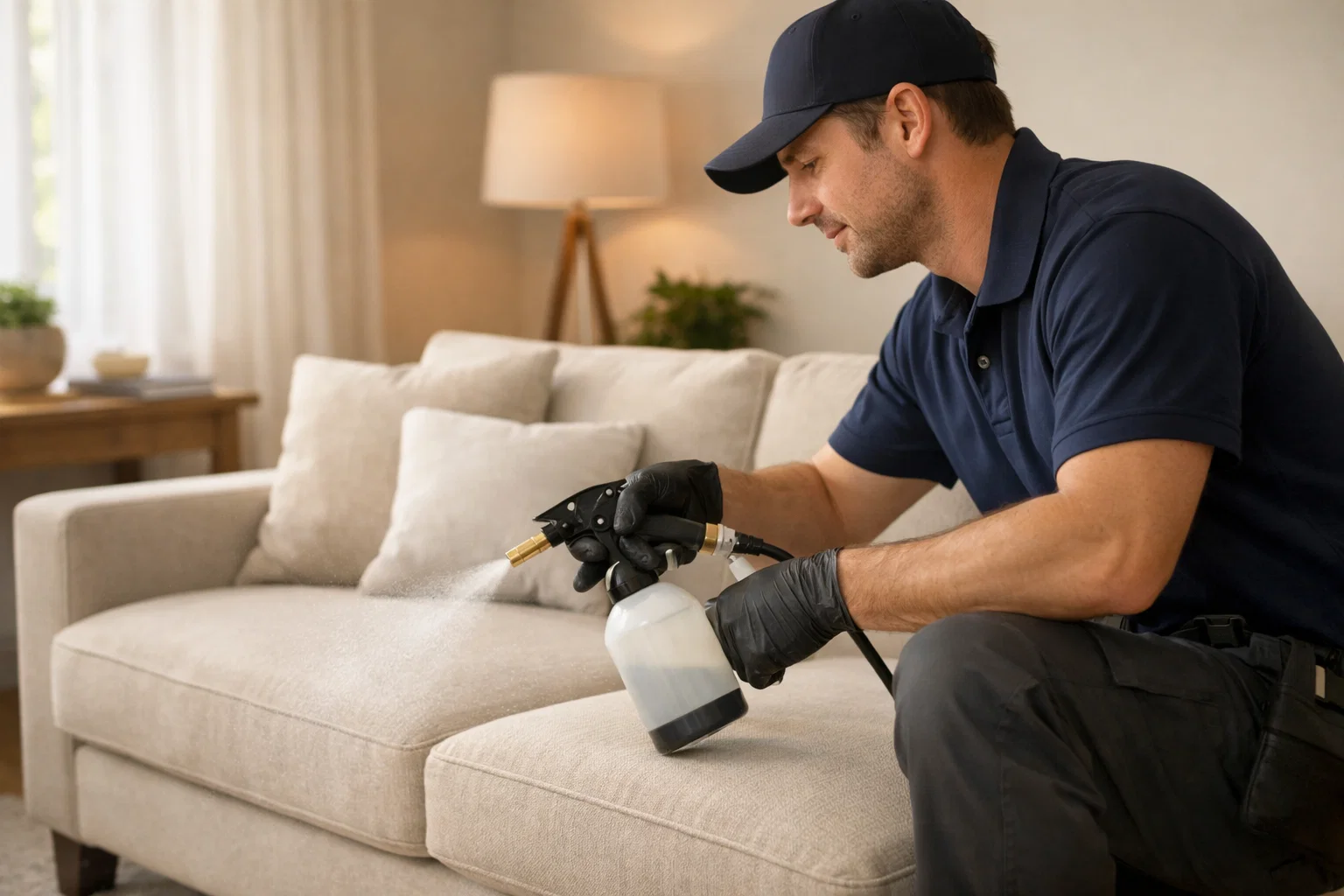
Before choosing a cleaning method, Angelo’s Carpet Cleaning looks at the fabric type, manufacturer cleaning code, dye stability, soil level, cushion construction, and problem areas such as headrests, armrests, pet spots, or recurring stains. That inspection helps determine whether hot-water extraction, low-moisture cleaning, or a specialty approach is the safer fit for the piece.
When low-moisture or specialty methods are better
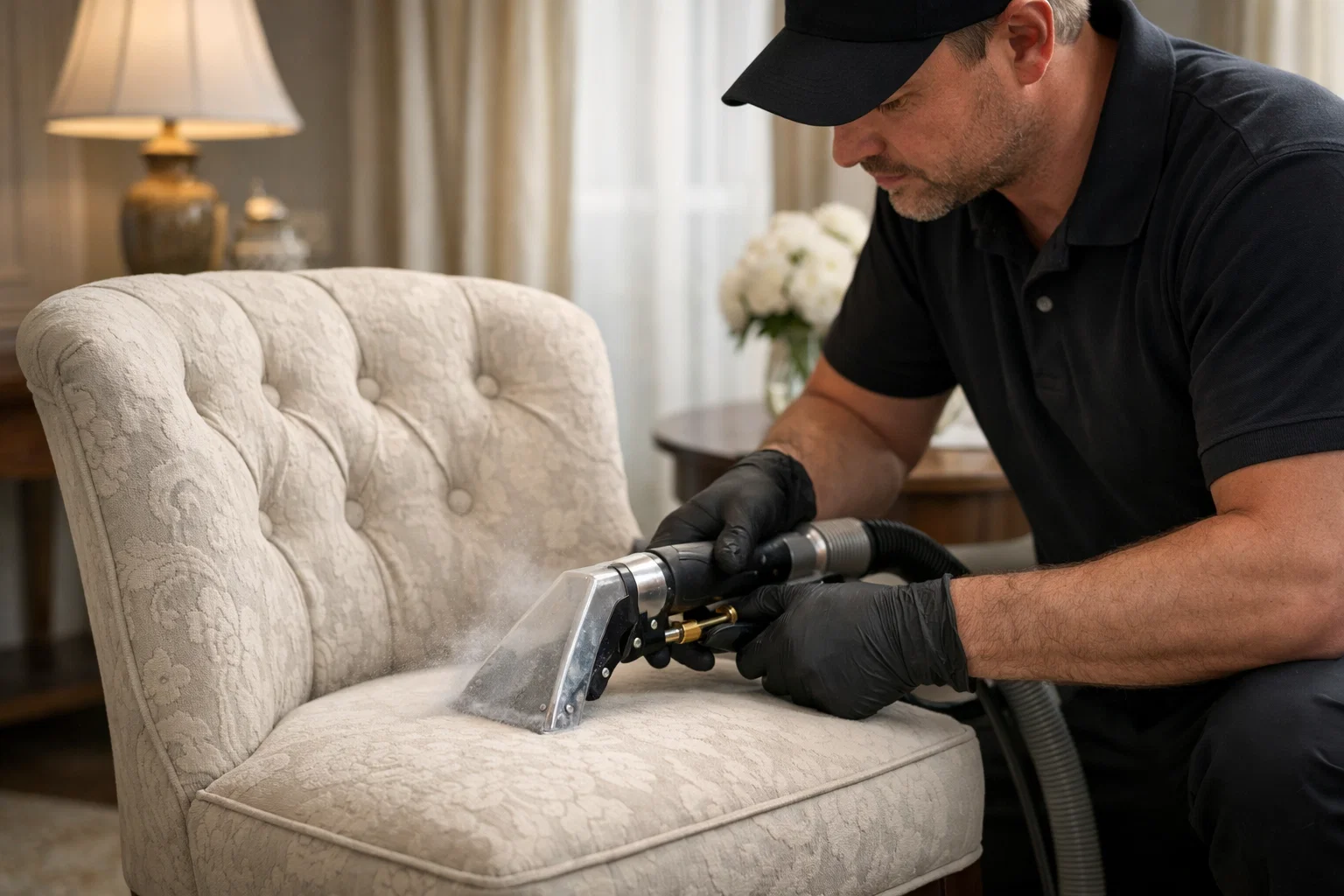
Not every fabric should be cleaned with hot-water extraction. Some materials are water-sensitive, and some textures can distort if over-wet. When the piece calls for it, a low-moisture approach can improve safety, shorten dry time, and reduce the risk of rings or texture change.
How often should upholstery be professionally cleaned?
Frequency depends on use. A formal sitting room does not need the same schedule as a daily-use family room couch. Many households do well with professional upholstery cleaning every 12 to 24 months. Homes with children, pets, allergies, or heavily used seating may benefit from cleaning every 6 to 12 months.
Ready to refresh your sofa, sectional, or chairs? Schedule upholstery cleaning with Angelo’s Carpet Cleaning for service in King of Prussia, Blue Bell, Royersford, Phoenixville, West Chester, Conshohocken, Pottstown, and nearby areas.
Fabric protection: what it does and does not do
Fabric protection can be a smart add-on for frequently used pieces. The goal is not to make a couch stain-proof. It helps slow absorption so you have more time to blot spills and can reduce how quickly dry soil bonds to fibers.
Local furniture care in Southeastern Pennsylvania homes
Many homes in King of Prussia, Blue Bell, Royersford, Phoenixville, West Chester, Conshohocken, Pottstown, and nearby communities have open-concept main rooms where sofas and chairs see constant use. Upholstery acts like a filter, collecting dust, oils, and daily contact faster than many homeowners realize.
If your living room also has rugs and carpet, pairing services can create a true reset: upholstery cleaning, area rug cleaning, and carpet cleaning.
How to prepare for an upholstery cleaning appointment
- Clear small items, blankets, and pillows from the furniture.
- Point out any spots, spills, odors, or areas of concern.
- Mention specialty fabrics, leather, suede, velvet, or manufacturer cleaning codes.
- Keep pets secure during the appointment.
- Improve airflow after cleaning to help pieces dry evenly.
FAQ
Is hot-water extraction safe for upholstery?
It can be when the fabric allows it and the process is controlled. Upholstery hot-water extraction uses careful moisture and strong recovery to lift soils and rinse residues without soaking the furniture.
Why do spots come back after DIY cleaning?
Usually because residue was left behind or the spill was pushed deeper. Soap residues attract soil and can make the spot reappear darker over time.
How often should upholstery be cleaned?
Many households do well with a 12 to 24 month schedule, while high-use homes with kids or pets often benefit from 6 to 12 month maintenance on primary seating.
Does Angelo’s Carpet Cleaning serve King of Prussia, Blue Bell, and Royersford?
Yes. Angelo’s Carpet Cleaning serves many nearby communities, including King of Prussia, Blue Bell, Royersford, Phoenixville, West Chester, Conshohocken, Pottstown, and surrounding areas.
How long does upholstery take to dry?
Dry time depends on fabric type, soil level, method used, and airflow. Improving ventilation and using fans helps upholstery dry faster and more evenly.
Schedule upholstery cleaning with Angelo’s Carpet Cleaning
Angelo’s Carpet Cleaning helps homeowners protect the comfort, appearance, and life of upholstered furniture with professional cleaning methods matched to the fabric. Contact us to discuss your sofa, sectional, chairs, fabric concerns, and scheduling options.
Call Angelo’s Carpet Cleaning: 610-935-7557 or request upholstery cleaning service in King of Prussia, Blue Bell, Royersford, Phoenixville, West Chester, Conshohocken, Pottstown, and nearby Southeastern Pennsylvania communities.