
Upholstery Cleaning • Furniture Care Guide
Upholstery Cleaning in King of Prussia, Blue Bell & Royersford: Furniture Care Guide
Professional upholstery cleaning helps remove body oils, dust, food residue, pet dander, and everyday soil from sofas, sectionals, chairs, ottomans, and other fabric furniture. The key is matching the cleaning method to the fabric, cleaning code, dye stability, backing, and cushion construction.
If you are in King of Prussia, Blue Bell, Royersford, Phoenixville, West Chester, Conshohocken, Pottstown, or another nearby Southeastern Pennsylvania community, this guide explains how to protect your furniture, avoid damaging DIY mistakes, and know when it is time to call Angelo’s Carpet Cleaning for professional upholstery cleaning.
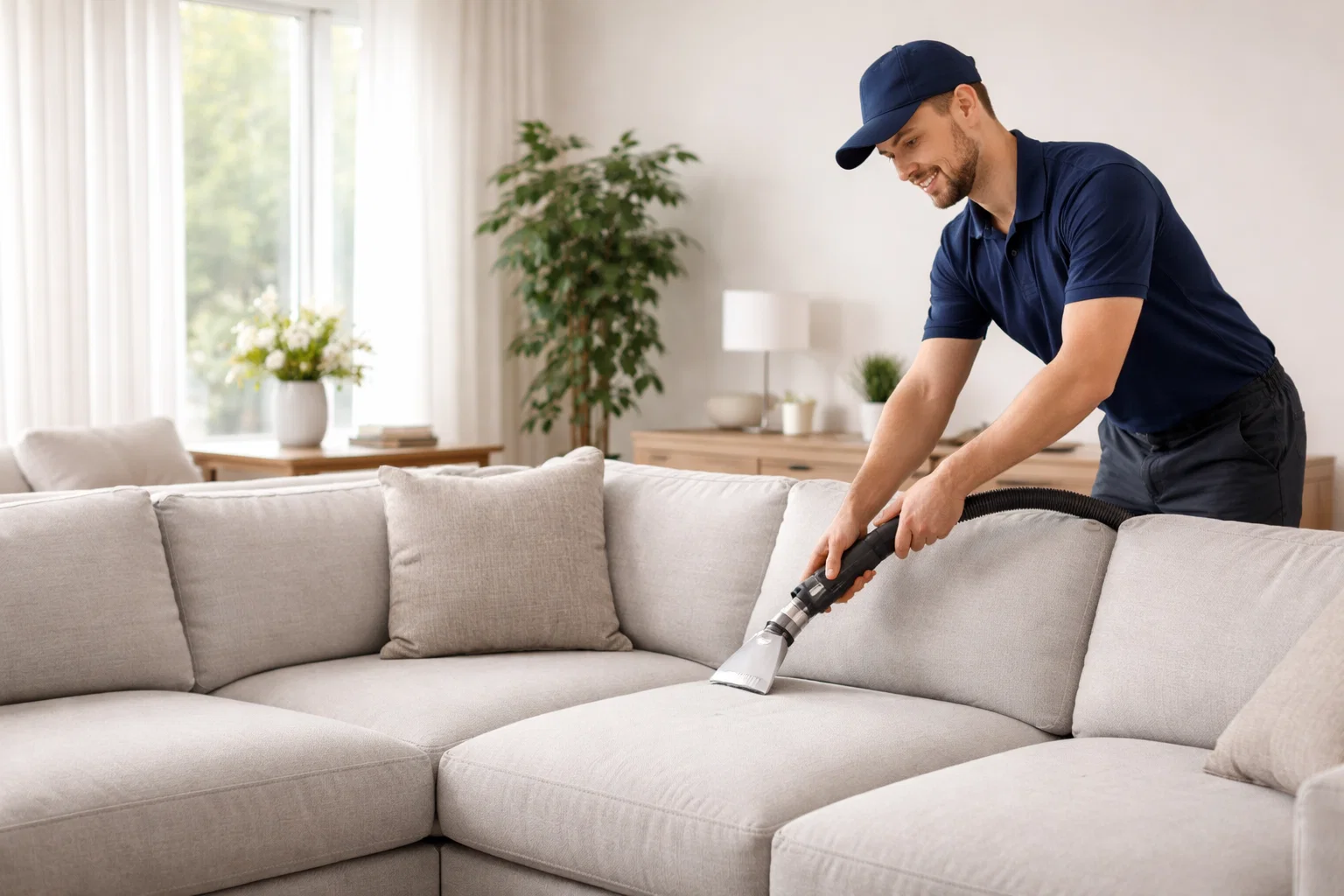
Quick answer: upholstery should be cleaned with a method that fits the fabric. Some pieces can be cleaned with controlled hot-water extraction, while others need low-moisture or specialty cleaning. Over-wetting, scrubbing, or using the wrong spot cleaner can leave rings, residue, texture damage, or recurring stains.
Need service? Angelo’s Carpet Cleaning provides professional upholstery cleaning for homes throughout Southeastern Pennsylvania.
Why upholstery gets dirty even when you do not spill
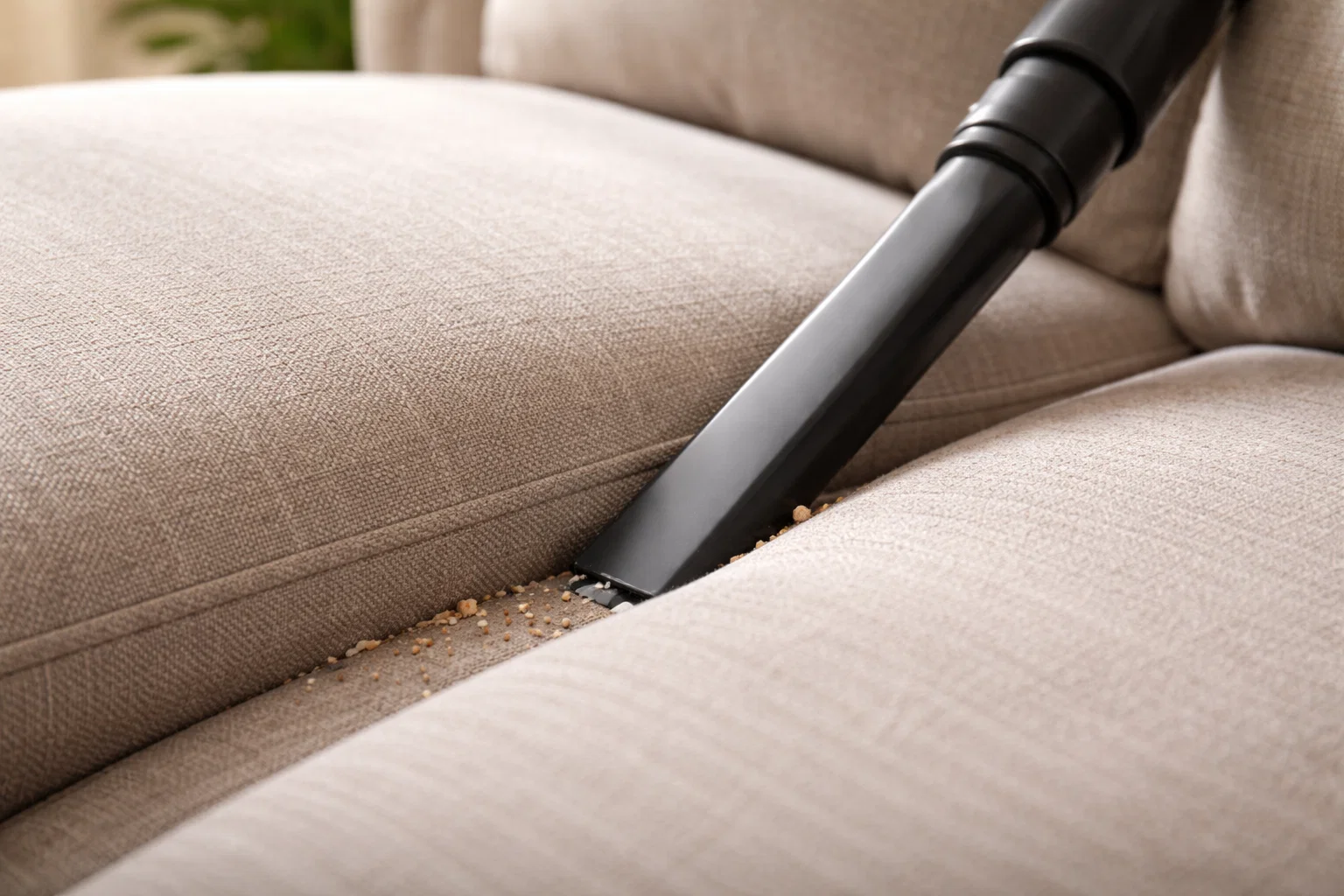
Most furniture does not look worn because of one big spill. It usually becomes dull from daily contact. Body oils collect on armrests, headrests, and cushion fronts. Dust, crumbs, pet hair, and grit settle between cushions. Over time, that soil can make fabric look gray, flat, or matted.
Busy family rooms in King of Prussia, Blue Bell, Royersford, and nearby towns often have “daily driver” seating that gets constant use from kids, pets, guests, and everyday living. Routine vacuuming helps, but it does not remove bonded oils or deep soil the way professional cleaning can.
Common signs your upholstery needs cleaning
- Darkened armrests, headrests, or cushion edges
- Flat or matted fabric texture
- Recurring spots after DIY cleaning
- Pet odor, dander, or embedded hair
- Dust, crumbs, or grit trapped between cushions
- Furniture that looks dull even after vacuuming
Check the upholstery cleaning code before using water
Before applying any cleaner, check the manufacturer tag. It is often located under a cushion or on the bottom of the furniture frame. The cleaning code helps determine whether water-based cleaning, solvent cleaning, low-moisture cleaning, or professional evaluation is safest.
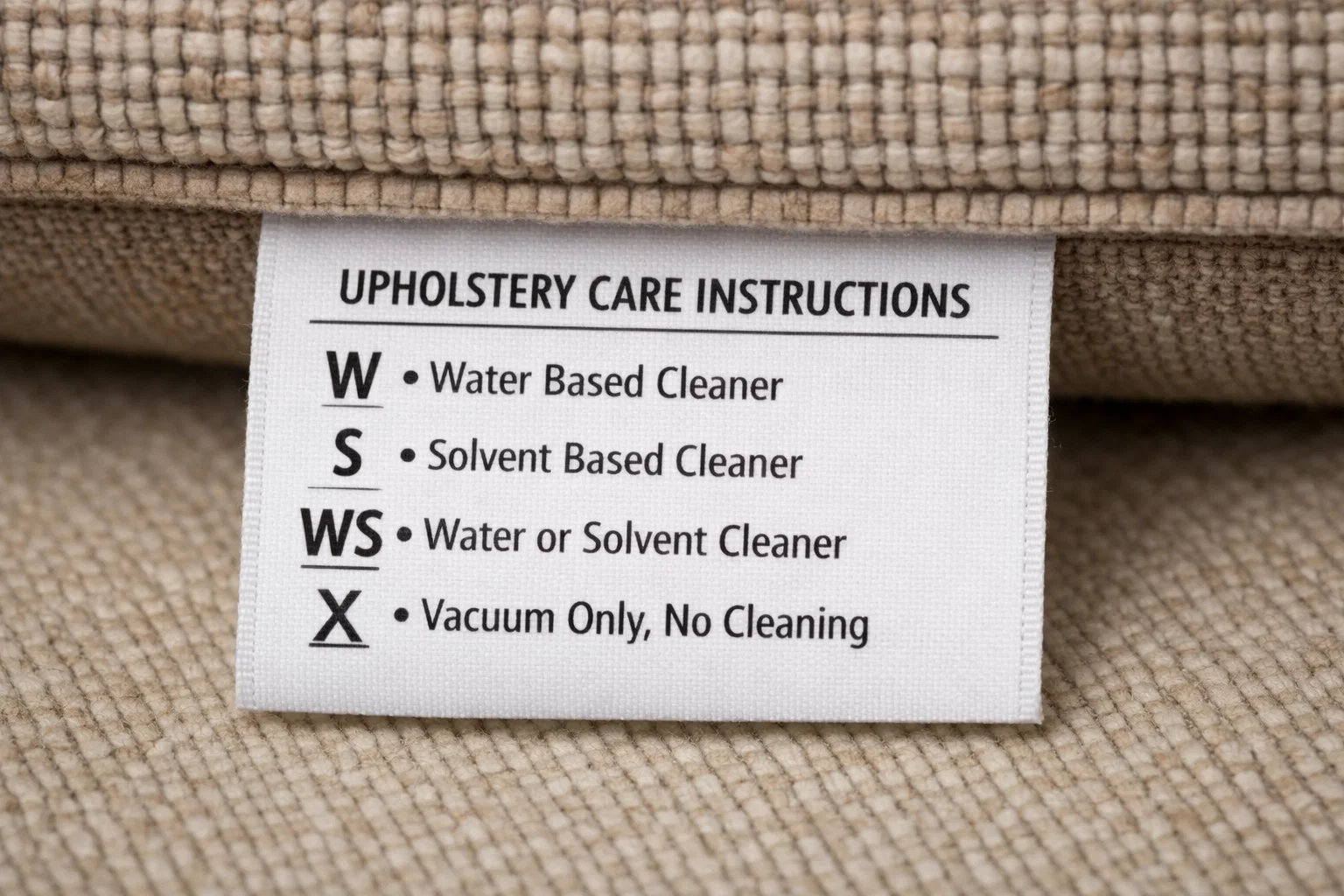
Code W
Code W means water-based cleaning may be allowed. This does not mean the fabric can be soaked. Controlled moisture and proper extraction still matter.
Code S
Code S usually means solvent-based or specialty cleaning is needed. Water can cause rings, texture change, or dye problems on some Code S fabrics.
Code WS
Code WS may allow either water-based or solvent-based methods, but testing is still important before cleaning the full piece.
Code X
Code X is the most restrictive. These fabrics should generally be vacuumed only and evaluated carefully before any cleaning attempt.
If your furniture is velvet, leather, suede, linen, rayon, viscose, or another specialty fabric, mention it when scheduling so the correct method can be planned.
At-home upholstery maintenance that actually helps
The goal of routine care is to slow down soil buildup, not to deep clean the furniture yourself. A few simple habits can help your upholstery look better between professional cleanings.
Weekly maintenance
- Vacuum cushions, arms, backs, and crevices with an upholstery tool.
- Remove pet hair before it becomes embedded.
- Rotate and fluff loose cushions if the furniture design allows it.
Monthly maintenance
- Check under cushions for crumbs and grit.
- Look for new spots while they are still easier to address.
- Move pillows and throws so fabric wears more evenly.
Seasonal maintenance
- Inspect primary seating for oils, dullness, and matted texture.
- Schedule professional cleaning before heavy buildup becomes permanent-looking.
- Ask about fabric protection for high-use pieces.
Spot-cleaning mistakes that can damage upholstery
DIY spot cleaning can help when done carefully, but the wrong product or technique can make a stain larger, leave residue, or change the fabric texture.
Mistake 1: using too much soap
Soap residue attracts soil. A spot may look clean at first, then come back darker because residue is pulling in oils and dust.
Mistake 2: over-wetting the cushion
Too much water can create rings, slow drying, spread contamination, or affect the cushion fill. Upholstery cleaning requires controlled moisture.
Mistake 3: scrubbing aggressively
Hard scrubbing can fray fibers, distort texture, and spread staining. Blotting is usually safer than scrubbing.
Mistake 4: using vinegar or baking soda on everything
DIY products can leave residue, alter fabric feel, or fail to remove the full spill load. They are not a universal fix for upholstery stains.
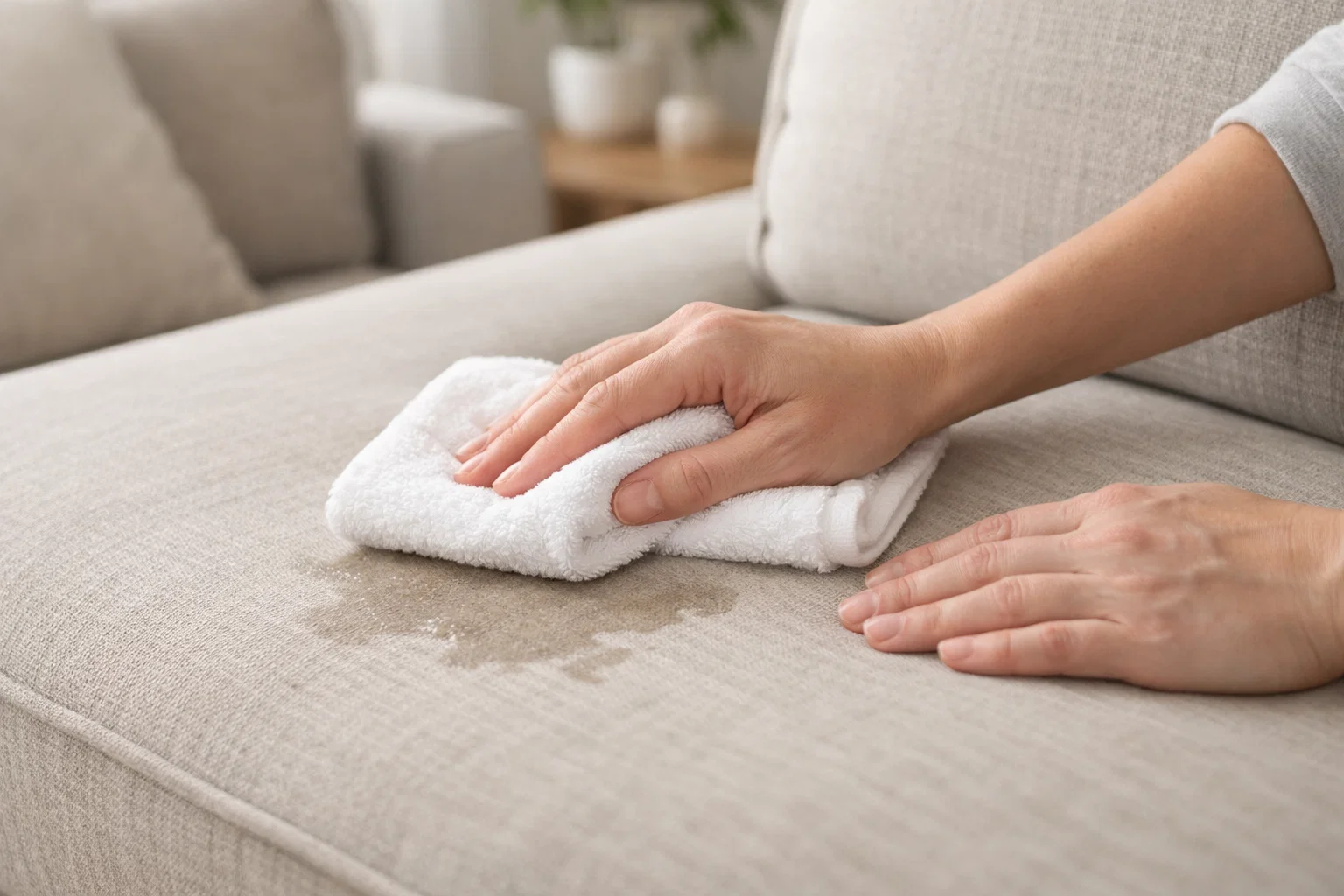
What to do right after a spill on fabric furniture
- Blot gently with a clean white towel.
- Do not scrub the spill into the fibers.
- Check the upholstery cleaning code before applying water or cleaner.
- Use as little moisture as possible.
- Call a professional if the stain spreads, returns, smells, or transfers dye to the towel.
Stop and call a professional if the furniture has a Code S or Code X tag, if the fabric is delicate, or if the spot is larger than your palm.
Professional upholstery cleaning and hot-water extraction
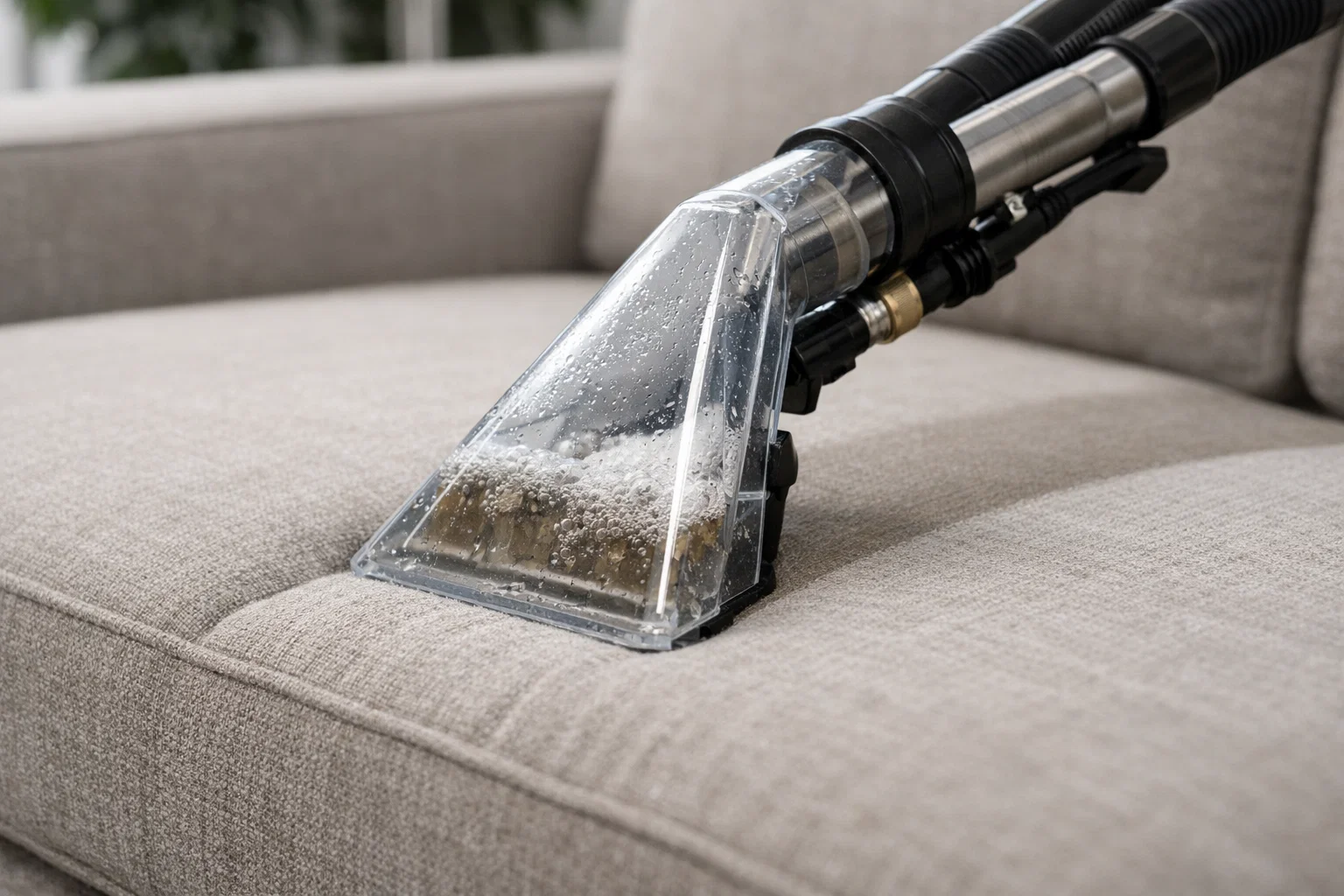
Hot-water extraction is a professional cleaning method that applies controlled cleaning solution and moisture, then extracts it back out with suspended soil. When used on the right fabric, it can remove body oils, embedded soil, spill residue, and other contaminants that vacuuming cannot reach.
A quality upholstery cleaning appointment may include fabric identification, pre-testing, targeted pre-treatment, controlled cleaning, extraction, grooming, and drying recommendations.
What professional upholstery cleaning can help remove
- Body oils on arms, headrests, and seat cushions
- Dust, grit, and embedded dry soil
- Food and drink residue
- Pet hair, dander, and everyday odors
- Residue from old DIY spot-cleaning attempts
When low-moisture upholstery cleaning is the safer choice
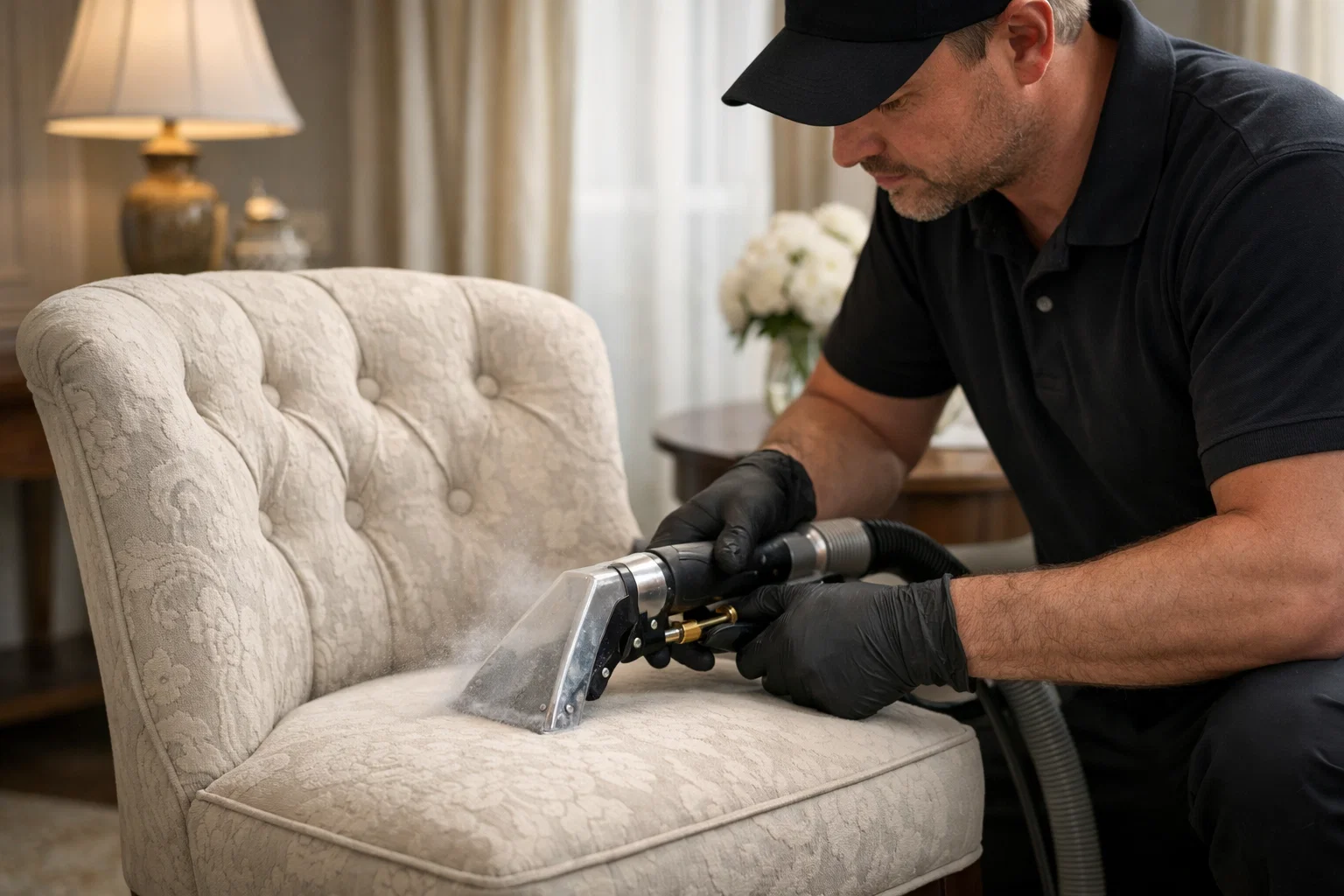
Not every fabric should be cleaned with hot-water extraction. Some materials are sensitive to water, heat, agitation, or long dry times. Low-moisture or specialty methods may be better for delicate fabrics, certain natural fibers, velvet-like textures, or furniture with unstable dyes.
How often should upholstery be professionally cleaned?
Many households benefit from professional upholstery cleaning every 12 to 24 months. High-use homes with kids, pets, allergies, frequent guests, or daily-use sectionals may benefit from cleaning every 6 to 12 months.
Formal sitting rooms may need cleaning less often, while family room sofas, recliners, and favorite chairs usually need more frequent maintenance.
Fabric protection for sofas and chairs
Fabric protection can be a smart option for frequently used furniture. It does not make upholstery stain-proof, but it can slow absorption, give you more time to blot spills, and reduce how quickly dry soil bonds to the fibers.
Upholstery cleaning for King of Prussia, Blue Bell, Royersford, and nearby areas
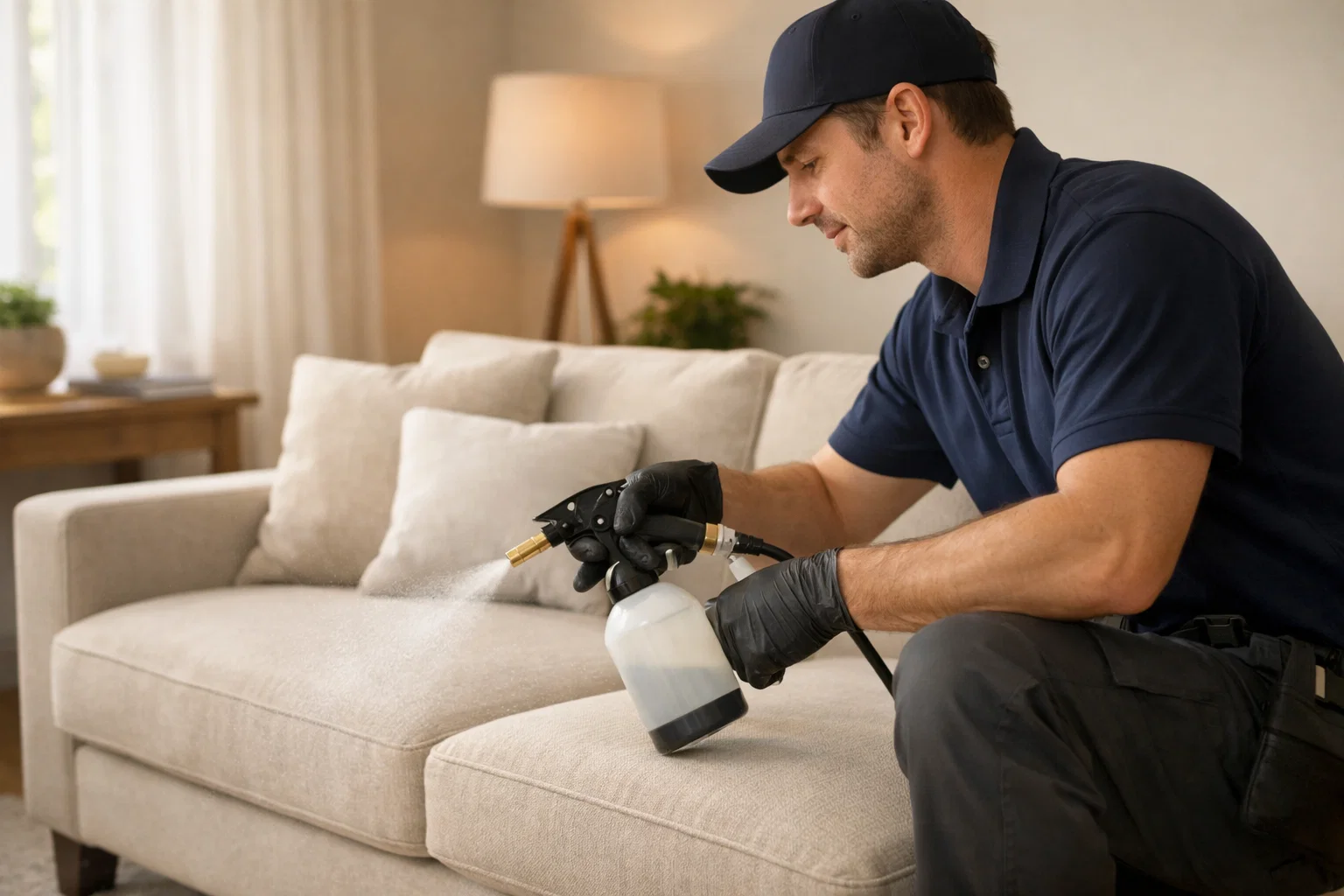
Angelo’s Carpet Cleaning serves homeowners in King of Prussia, Blue Bell, Royersford, Phoenixville, West Chester, Conshohocken, Pottstown, Collegeville, and surrounding Southeastern Pennsylvania communities.
If your living room needs a full refresh, consider pairing upholstery cleaning with area rug cleaning and professional carpet cleaning.
How to prepare for an upholstery cleaning appointment
- Remove blankets, pillows, toys, and small items from the furniture.
- Point out stains, spills, pet areas, odors, or delicate spots.
- Share any manufacturer cleaning code you found.
- Mention specialty fabrics such as leather, suede, velvet, linen, rayon, or viscose.
- Keep pets secure during the appointment.
- Improve airflow afterward to help furniture dry evenly.
FAQ: upholstery cleaning
Is hot-water extraction safe for upholstery?
It can be safe when the fabric allows it and the moisture is controlled. Some fabrics need low-moisture or specialty cleaning instead.
Why do upholstery spots come back after DIY cleaning?
Spots often return because soap residue was left behind or the spill was pushed deeper into the fabric or cushion. Residue attracts soil and can make the area look darker over time.
How often should I clean my sofa?
Many homes do well with professional cleaning every 12 to 24 months. High-use furniture in homes with kids or pets may need service every 6 to 12 months.
Can you clean microfiber upholstery?
Many microfiber pieces can be cleaned successfully, but the cleaning code and condition of the fabric still need to be checked before choosing a method.
Does upholstery cleaning remove pet odor?
Professional upholstery cleaning can help reduce pet odor, dander, and oils. Severe urine contamination, cushion saturation, or specialty fabrics may require additional treatment or a more cautious approach.
How long does upholstery take to dry?
Dry time depends on the fabric, soil level, cleaning method, humidity, and airflow. Fans and good ventilation help furniture dry faster and more evenly.
Do you serve King of Prussia, Blue Bell, and Royersford?
Yes. Angelo’s Carpet Cleaning serves King of Prussia, Blue Bell, Royersford, and nearby Southeastern Pennsylvania communities.
Schedule upholstery cleaning with Angelo’s Carpet Cleaning
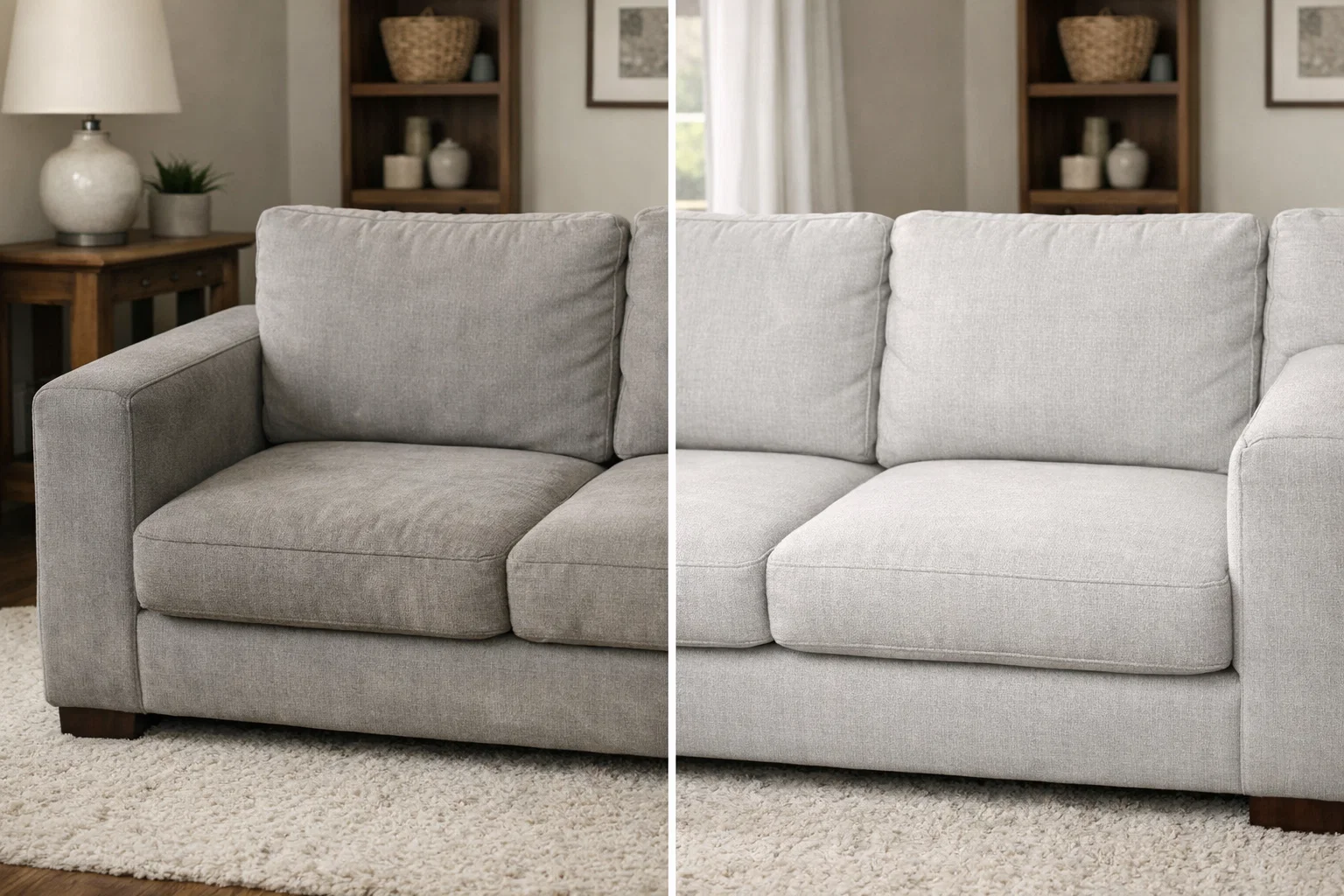
Clean upholstery can make your whole living room feel fresher. If your sofa, sectional, recliner, or chairs are dull, spotted, or holding odors, contact Angelo’s Carpet Cleaning to discuss the safest cleaning method for your furniture.
Ready to schedule? Contact Angelo’s Carpet Cleaning or call 610-935-7557.